









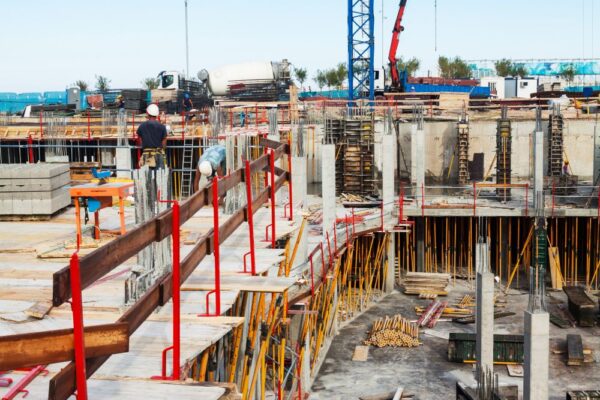
Construction work is one of the most dangerous jobs in the country. In 2024, 1,032 construction workers died, according to the Bureau of Labor Statistics. That means one worker died every 8.5 hours. A worker died from a job-related injury every 104 minutes. Each number represents a person, a family, and a loss that should not have happened.
Houston is one of the busiest construction markets in the United States. Areas like the Energy Corridor, the Medical Center, and the Port of Houston keep thousands of workers on job sites every day. Texas often ranks among the states with the most construction deaths. Many of these deaths could have been prevented. Many also lead to lawsuits.
When a Houston job site accident turns fatal or causes catastrophic injury, the legal process that follows is complex. Multiple parties are typically involved. Evidence disappears fast. Deadlines are strict. For injured workers and their families, that process can feel overwhelming. Sutliff & Stout is a trusted construction accident firm Houston. Workers and families turn to the firm when job site negligence leads to serious, life-changing harm.
Here are the 10 most fatal construction accident types, why they keep happening, and when they produce lawsuits.
1. Falls From Heights
Out of the 345 deaths caused by falls in 2023, 96 of them were in the construction industry, more than any other sector. Fatal falls, slips, and trips among construction workers decreased 7.5 percent to 370 in 2024 from 400 in 2023. Despite the improvement, falls remain the single deadliest category in construction by a significant margin.
Houston’s construction projects include high-rise developments, elevated highway work, and multi-story commercial builds across the city. Workers operate on scaffolding, ladders, rooftops, and open-sided floors daily. Fall Protection under 29 CFR 1926.501 is the most frequently cited OSHA standard in fiscal year 2024. Meaning employers are still failing to provide adequate guardrails, harnesses, and fall arrest systems at an alarming rate.
When It Becomes a Lawsuit
A fall becomes a lawsuit when OSHA finds a violation at the scene. Missing guardrails, defective harnesses, improperly constructed scaffolding, and failure to provide fall protection training all create documented negligence. The general contractor’s responsibility for overall site safety management means that even subcontractor employees who fall can pursue claims against the GC directly.
2. Struck-By Incidents
About 8 percent of construction worker deaths in 2021 were due to workers struck by objects that were swinging, falling, or misplaced, including falling objects from rigging failure, loose or shifting materials, equipment malfunctions, and vehicle or equipment strikes. Struck-by incidents are the second leading fatal category after falls and the most unpredictable.
Houston job sites operate cranes, forklifts, concrete trucks, and aerial lifts in close proximity to workers on foot. A load that shifts during a crane lift, a forklift traveling a blind corner, or a piece of equipment ejecting debris can strike a worker without warning. High-rise construction creates falling object hazards for ground-level workers below active work areas.
When It Becomes a Lawsuit
Struck-by cases produce lawsuits against equipment operators, lift supervisors, rigging contractors, and equipment manufacturers. When a load fails because of improper rigging, the rigging contractor bears direct liability. When a crane malfunctions because of a mechanical defect, the manufacturer faces a products liability claim alongside the operator. OSHA inspection records identifying the source of the struck-by hazard are the foundation of every lawsuit in this category.
3. Electrocution
Electrocution accounted for about 8 percent of construction worker deaths, with risks including exposed wiring and wet conditions near outlets, contact with overhead power lines, energized conductors or circuit parts, and poorly maintained power tools. Electrical injuries are among the most costly and complex to treat, risking permanent internal damage and severe burns.
Houston’s construction corridors run alongside and beneath active electrical infrastructure. Underground utilities are dense across Harris County. Overhead high-voltage lines cross active work areas on many Houston commercial and residential projects. Failure to call 811 before digging, failure to de-energize equipment before maintenance, and failure to maintain proper clearance from overhead lines all produce electrocution incidents.
When It Becomes a Lawsuit
Electrocution cases frequently name multiple defendants. The general contractor for failing to identify electrical hazards in the site safety plan. The subcontractor whose crew worked near energized lines without adequate protection. The utility company when a line was improperly marked or inadequately protected. OSHA Lockout/Tagout violations under 29 CFR 1910.147 at the time of the incident create documented negligence that drives settlement values significantly higher.
4. Caught-In and Caught-Between Incidents
About 5 percent of construction worker deaths were from employees getting caught in or between machines, devices, tools, or trenches, including workers caught between moving or rotating equipment or collapsing structures. Trench collapses are the most deadly caught-in scenario on construction sites.
Houston’s soil conditions make trench work particularly hazardous. Clay-heavy soil that appears stable can shift rapidly under the weight of adjacent equipment or during rain events. OSHA requires protective systems for any trench deeper than five feet under 29 CFR 1926.652. Violations of that requirement have produced some of the largest construction site verdicts in Texas history.
When It Becomes a Lawsuit
A trench collapse that kills or buries a worker almost always produces litigation when OSHA finds that the employer failed to install required shoring, sloping, or trench box protection. The employer’s direct liability is clear. Third-party liability may extend to soil testing contractors who provided inaccurate assessments or equipment operators whose activity destabilized the trench wall.
5. Crane and Heavy Equipment Accidents
Crane accidents account for a disproportionate share of construction fatalities relative to how many cranes operate on active sites. Load failures, operator errors, structural collapses, and contact with power lines are the primary crane fatality mechanisms. Residential building construction led with the most injuries in 2023 with numbers surpassing 10,000. Commercial high-rise construction, which relies heavily on tower cranes, produces the most severe outcomes when crane incidents occur.
The city’s skyline construction projects require tower cranes that operate in proximity to active streets, occupied buildings, and other workers. Crane maintenance schedules, operator certification requirements, load capacity calculations, and assembly and disassembly procedures are all governed by OSHA standards. When any of these are ignored to meet project timelines, the risk of catastrophic failure rises sharply.
When It Becomes a Lawsuit
Crane accident lawsuits involve the most complex multi-party liability structures in construction litigation. The crane rental company, the crane operator’s employer, the general contractor, the load rigging subcontractor, and the crane manufacturer can all face claims simultaneously. OSHA Cranes and Derricks standards under 29 CFR 1926.1400 generate some of the most detailed investigation records in any construction fatality.
6. Scaffold Collapses
Scaffolding under 29 CFR 1926.451 is the eighth most cited OSHA standard in fiscal year 2024. That citation frequency reflects how consistently employers fail to meet scaffolding safety requirements. A scaffold that collapses under multiple workers produces mass casualty events that are among the most legally significant construction accidents.
Scaffolding on Houston job sites is often erected and modified rapidly to meet project timelines. Weight capacity overloading, improper plank installation, inadequate base support on Houston’s unstable soil, and missing guardrails are the most common violation patterns. Workers who do not erect scaffolding themselves are entitled to assume it is safe. When it is not, every party who had control over its assembly bears potential liability.
When It Becomes a Lawsuit
Scaffold collapse lawsuits frequently name the scaffold rental company alongside the general contractor and the subcontractor who erected it. When the collapse results from a manufactured defect in the scaffold system itself, the manufacturer faces a products liability claim. When multiple workers are injured in a single collapse, the litigation involves multiple plaintiffs pursuing coordinated claims against the same defendants.
7. Trench and Excavation Collapses
Trench collapses kill faster than almost any other construction accident. A cubic yard of soil weighs approximately 3,000 pounds. An unprotected trench that collapses on a worker produces forces equivalent to being struck by a car at high speed, with no protective equipment capable of preventing the injury. OSHA data consistently shows that trench fatalities cluster around employers who knowingly skipped required protective systems.
Houston’s extensive underground utility and pipeline infrastructure requires constant excavation work across the city. The combination of clay soils, groundwater, and heavy equipment operating near open trenches creates trench instability that surprises employers who rely on visual inspection rather than soil classification requirements. OSHA requires a competent person to classify soil before any trench protection system is designed. That requirement is frequently ignored on tight-deadline projects.
When It Becomes a Lawsuit
Trench collapse cases are among the most legally straightforward in construction litigation because OSHA standards are specific, and documented violations are common. An employer who did not install a trench box, did not slope or shore the excavation, or did not have a competent person classify the soil has created a documented negligence basis that is difficult to defend at trial.
8. Ladder Falls
Ladders under 29 CFR 1926.1053 are the fourth most cited OSHA standard in fiscal year 2024. Ladder falls are the most common mechanism for the construction industry’s leading fatality cause. They occur across every trade on every type of job site. Extension ladders, step ladders, and fixed ladders all produce fatal falls when improperly used or maintained.
Ladder safety violations on Houston job sites include using ladders not rated for the load weight, placing ladders on unstable surfaces, failing to secure the top of an extension ladder, and using damaged or defective equipment that should have been removed from service. Workers who feel production pressure often skip the safety steps that add minutes to a task but prevent falls.
When It Becomes a Lawsuit
Ladder fall lawsuits examine whether the ladder itself was defective, whether the employer provided adequate fall protection training, and whether the worker was directed to use equipment they reported as unsafe. When a worker complained about a defective ladder before the fall, that complaint record is the most powerful evidence in the resulting lawsuit.
9. Struck-By Vehicle Incidents
Roadway incidents involving motorized land vehicles decreased 8.5 percent to 1,146 in 2024 from 1,252 in 2023. A significant share of those incidents involves construction workers struck by vehicles in active work zones. Work zone fatalities occur when traffic controls fail, when workers operate outside designated safe zones, or when vehicles operating within the job site strike pedestrian workers.
When a construction worker is struck by a vehicle on or near a Houston job site, the claim involves both workers’ compensation and civil personal injury law simultaneously. The driver who struck the worker, the driver’s employer if they were operating a company vehicle, and the general contractor responsible for traffic management within the work zone can all face liability in the same case. Sutliff & Stout, a Houston car accident law firm that handles vehicle-related construction injury claims, regularly pursues multi-party cases in which the struck-by incident involves both a road vehicle and a negligently managed work zone.
Houston’s infrastructure construction projects place workers directly adjacent to some of the busiest highways in the country. I-10, I-45, and US-59 all have active construction zones where workers operate within feet of 70 mph traffic. Internal job site traffic, including concrete trucks, dump trucks, and delivery vehicles, creates struck-by hazards for workers on foot within the site perimeter.
When It Becomes a Lawsuit
Struck-by vehicle cases on public roadways produce liability against the driver, the driver’s employer if they were working, and potentially TxDOT or the construction contractor if inadequate traffic controls contributed to the incident. Internal job site struck-by cases produce liability against the vehicle operator, the operator’s employer, and the general contractor responsible for site traffic management.
10. Heat-Related Illness and Death
Texas leads the nation in heat-related worker fatalities. The combination of year-round construction activity, extreme summer temperatures regularly exceeding 100 degrees Fahrenheit, and physical labor intensity creates conditions that kill workers who are not adequately protected. Exposure to harmful substances and environments accounted for a substantial portion of construction worker fatalities in Texas.
Houston’s humidity compounds heat index temperatures well beyond air temperature readings. A 95 degree Fahrenheit day in Houston with 80 percent humidity produces heat index values exceeding 110 degrees. OSHA’s heat illness prevention standards require employers to provide water, rest, and shade. When employers ignore those requirements to maintain production timelines, workers develop heat exhaustion that progresses to heat stroke and death.
When It Becomes a Lawsuit
Heat death lawsuits establish that the employer knew about extreme heat conditions, knew about OSHA heat illness prevention requirements, and failed to implement adequate protection. Internal communications showing the employer prioritized production over worker safety, combined with temperature records for the date of death, are the primary evidence sources. Texas has seen multiple successful heat death lawsuits against construction employers in the last decade.
When Any of These Accidents Produces a Lawsuit
Every accident type above follows the same legal logic when it produces a serious injury or death on a Houston job site.
OSHA Citations Create the Foundation
When OSHA investigates and issues citations, those findings become the backbone of the civil lawsuit. A citation for a Fall Protection violation, a Scaffolding violation, or a Trench Protection violation establishes that the employer failed to meet a legally required safety standard. That failure is the negligence. The injury or death is the consequence.
Texas Workers’ Comp Does Not End the Story
Texas is the only state in the country where private employers can opt out of workers’ compensation. Non-subscriber employers can be sued directly for negligence without the caps that workers’ comp imposes. Even when workers’ comp applies, third-party claims against contractors, equipment manufacturers, and property owners remain available alongside the comp claim.
Evidence Disappears Fast
Job sites change daily. Surveillance footage is overwritten. Equipment is repaired or removed. Witnesses move on to other projects. A legal hold notice must go to the general contractor, all subcontractors, equipment rental companies, and the property owner within days of a serious accident. The families and workers who recover the most are those whose attorneys acted immediately, not months later.
The Two-Year Deadline Is Firm
Texas Civil Practice and Remedies Code Section 16.003 sets a two-year statute of limitations for personal injury claims. For wrongful death claims, the same two-year deadline runs from the date of death. For claims against government entities, including TxDOT, formal written notice is required within 180 days and sometimes as few as 45 days. Missing any of these deadlines permanently ends the legal right to recover.
Final Thoughts
Construction accidents in Houston are not random events. They follow clear patterns, repeat the same safety failures, and often involve risks that are well understood across the industry. Falls, equipment incidents, trench collapses, and heat exposure continue to take lives despite existing safety standards designed to prevent them.
When these incidents happen, the consequences are immediate and permanent. Families lose loved ones. Workers face life-altering injuries. The legal process that follows is often the only path to accountability, especially when negligence played a role.
Understanding how these accidents happen and why, matters. It helps workers recognize unsafe conditions. It helps families ask the right questions. And it reinforces a simple truth: many of these deaths should never have happened in the first place.






