








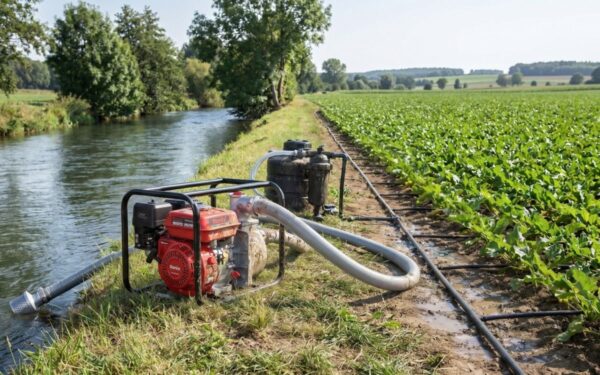
Whether it’s resolving low water pressure in aging homes, clearing groundwater after heavy rain, or effectively pushing wastewater out drainage systems, UK households and businesses rely on water pumps to do the heavy lifting. These relatively simple devices are key components in agriculture, construction, manufacturing and utilities, where they ensure consistent water supply and pressure and keep things moving.
Water Pump Basics
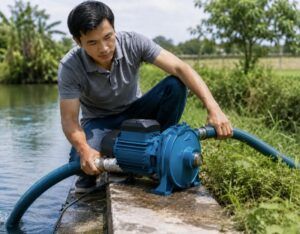
At their core, water pumps are mechanical devices that move water from one place to another by increasing pressure. They do this by converting kinetic energy into hydraulic energy. They’re standard inclusions in residential properties, supplying consistent water pressure in taps, showers, toilets and hot water systems, as well as dozens of commercial and industrial applications, including wastewater management, irrigation, landscaping, chemical processing, equipment cooling and more.
Common Water Pump Types
Water pumps can be classified by their energy source, working principle and how and where they’re used.
Pumps By Power Source
Petrol and Diesel
Popular for off-grid versatility, portability and high output, diesel and petrol pumps see frequent use in agriculture, farming, construction sites, mines and industrial facilities. Here they actively aid crop irrigation, moving water from rivers, tanks and wells; supply livestock with drinking water; remove wastewater, debris and mud in excavation pits and trenches and slurry and groundwater in mines. They’re also dependable for emergency floodwater management during power outages.
Key advantages are high efficiency, dependable torque to move large volumes of water, durable builds and long run times. Choose diesel pumps for heavy-duty use, safer operation and generally longer lifespans, or a petrol water pump for lower weight, quiet operation and lower purchase cost.
Electric
Electric water pumps are the mainstay of residential and municipal water supply, where they deliver potable water, fill pools and ponds, boost pressure in apartments and high-rises, handle sewage and move raw water into purification plants. These pumps are also found in industrial facilities as part of comprehensive equipment cooling systems or engaged in high-pressure cleaning and processing facilities. They’re quiet, highly efficient and need little to no maintenance, foregoing replacement parts like spark plugs or fuel filters in petrol and diesel variants. The absence of exhaust fumes also makes them safe for indoor use.
Solar
A newer technology, solar-powered pumps seen in moving water in smaller residential gardens and greenhouses, livestock troughs with no mains connections and supplying water in off-grid applications, such as motorhomes. They benefit from zero operational costs, very low maintenance needs, and quiet operation. While not as abundant as electric or fuel water pumps, solar variants are seeing steady sales due to changing lifestyles, and the push towards sustainability.
Pumps By Working Principle
Classified by how they move water, pumps can be classified into centrifugal and positive displacement types.
- Centrifugal: These move water and liquids using rotational force. Common parts are spinning vanes or impellers that move the water, shafts and motors that turn impellers and casings that guide water into outlets. The pumps work by creating suction with the movement of impellers as these accelerate and increase discharge pressure as water is pushed through outlets. Common centrifugal types are submersible pumps – seen in floodwater management, ponds and construction sites; end- suction pumps in HVAC systems and municipal water distribution; and multi-stage pumps when boosting pressure in taller buildings, in high-pressure boilers and deep-pit mining sites.
- Positive Displacement: These move water and liquids by trapping a fixed volume in an enclosed cavity and forcing it through discharge pipes. Water enters a sealed casing through inlets via suction created by moving internal parts like pistons, gears or plungers, is sealed off from the inlet and is pressurised as moving parts shrink cavity space. Common examples are piston pumps in pressure washing systems, and rotary pumps in food and chemical processing, where the devices provide consistent output, strong pressure, and the ability to work with high-viscosity fluids such as oils, gels, and syrup.
Key Water Pump Applications
- Residential: Boosting water pressure; circulating water in pools, ponds and hot tubs; watering gardens and lawns
- Agriculture and farming: Irrigating crops via sprinkler and drip systems; supplying fresh water to livestock; draining drenched farmland
- Industrial: Transporting water, chemicals and liquids in manufacturing processes; cooling systems in machinery and production facilities; general cleaning, maintenance and wastewater removal
- Construction and mining: Removing ground and rainwater in excavation sites; high-volume ore movement; dust suppression; machinery maintenance, cleaning and cooling
- Emergency water management: Flood mitigation and drainage; firefighting; supplying water form alternative sources
Main Buying Considerations
Choosing the right water pump improves efficiency, lowers fuel and energy use, reduces operating and maintenance costs and provides the flexibility for diversified use and adaptability to changing needs. Besides the correct type of pump suitable to the setting and task, also consider:
- Flow rates: This is how quickly the pump moves a specified amount of water, in litres per minute (LPM). Smaller pumps have flow rates averaging 100 litres a minute, mid-sized pumps hover around 500 litres a minute, and large, powerful industrial units are rated for 5000 litres a minute or more. The right flow rate meets operational needs with consistent water pressure, prevents damage or overheating and reduces operating costs.
- Pressure ratings: This determines how hard pumps need to work to push water though outlets and pipes – and is largely dependent on the application. Some tasks, such as hot-water systems and pressure washing require pumps with higher pressure, while others such as irrigation and garden watering low pressure. Undersized pumps will struggle with flow and consistency, while those that generate too much pressure can rupture pipes and plumbing and damage equipment. As an illustration, mid-sized diesel centrifugal pumps in off-grid applications have pressure ratings between 5 and 15 PSI, while submersible pumps that need to boost water upward hover around 30 to 60 PSI.
- Water and fluid types: Pumps move more than water. Consider fluid viscosity and debris content, and how these impact operation and durability. Clean water is handled easily by standard centrifugal pumps, but thicker liquids like oils and syrups are better handled by positive displacement pumps. Here internal builds and material quality also are determining factors. Consider pumps with cast iron or steel internals for non-corrosive settings, but step up to stainless steel, composites or engineering plastics when moving sludge and slurry to prevent clogging, overheating and rust buildup.
- Power sources, operating costs and maintenance needs: The right power source and compatibility with plumbing and related equipment ensure pumps work as needed. Electric pumps are fine in settings with nearby mains connections, but are replaced by portable fuel and solar-powered units in off-grid applications. Moreover, consider units that bring cost and operation savings by using less energy, have a steady supply of replacement parts and are covered by defined warranties if something goes wrong.




