









NanaWall Systems ,as multifamily development continues to evolve, return on investment is increasingly shaped by how effectively buildings support the way people actually live. With more than 600,000 new multifamily units delivered in the U.S. in 2024, the highest annual total in nearly four decades, competition across both rental and owner-occupied segments has intensified. In this environment, thoughtful architectural detailing is no longer optional. Design decisions, particularly those related to fenestration, play a direct role in differentiation, market performance, and long-term asset value.
Across rental communities and high-end, owner-occupied condominiums, developers are being challenged to deliver spaces that feel larger, more flexible, and more connected to the outdoors, without increasing the building footprint. High-performance operable glass wall systems are increasingly specified to meet this demand, supporting distinct ROI goals across residential units and amenity spaces while maintaining the performance integrity of the building envelope.
Images Courtesy of: NanaWall Systems
Indoor-Outdoor Living as a Measurable Value Driver
Multifamily residents and buyers alike are seeking homes that can adapt throughout the day and across seasons. Rather than single-purpose rooms, today’s spaces are expected to support work, wellness, relaxation, and social interaction within the same footprint. Indoor-outdoor living responds directly to this shift by allowing exterior areas such as terraces, balconies, and courtyards to function as true extensions of interior space.
From an ROI perspective, this expanded usability improves perceived square footage, enhances daily livability, and increases market appeal without adding to the building envelope. While large openings have traditionally raised concerns about performance, high-performance operable glass wall systems are engineered and tested as complete assemblies. Independent testing to ASTM standards verifies air infiltration, water penetration, and structural performance at full panel dimensions, ensuring envelope continuity even with expansive openings.
Amenity Spaces That Perform Across Rental and Ownership Models
Amenity spaces represent one of the most consistent and high-impact applications for operable glass wall systems across all multifamily categories. These shared environments are central to daily life, making their flexibility, durability, and performance critical to long-term value. Operable glass walls allow amenity spaces to open fully to adjacent outdoor areas, improving daylight, views, and circulation while enabling spaces to shift seamlessly between enclosed and open-air configurations. This adaptability increases the number of hours and seasons these areas can be comfortably used, supporting everything from daytime work and fitness to evening relaxation, entertainment, and events. Well-utilized amenity spaces strengthen community engagement, increase satisfaction, and contribute to sustained asset performance.
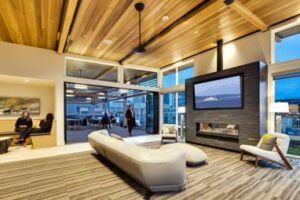
At Sitka Apartments, a rental community with coworking lounges, game rooms, and shared gathering spaces, operable glass walls enable residents to use amenity areas throughout the day for a range of activities. These spaces function as flexible extensions of the home, supporting engagement and reinforcing their value beyond occasional events.
Images Courtesy of: NanaWall Systems
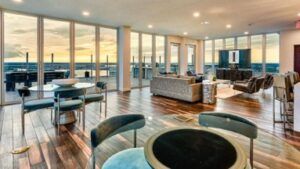
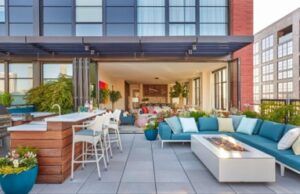
At Icon Norfolk, folding glass walls open a rooftop tenant lounge directly to a pool and outdoor amenities. This integration allows the space to feel significantly larger while maintaining functionality in a high-exposure rooftop environment. Across both rental and owner-occupied developments, amenity spaces in elevated or weather-exposed locations demand systems that balance openness with proven performance.
Threshold design plays a key role in these applications. Water-rated sills that effectively manage moisture while maintaining low-profile, ADA-compliant transitions allow seamless indoor-outdoor circulation without introducing accessibility barriers. By addressing water management and code compliance simultaneously, folding glass walls with the correctly specified sill help reduce long-term envelope risk in high-traffic shared spaces.
Rental Multifamily: Flexibility, Utilization, and Retention
In the rental segment, operable glass wall systems are most frequently specified in amenity spaces and select unit types where flexibility and differentiation directly impact leasing performance. As residents increasingly expect their homes to accommodate multiple aspects of daily life, adaptable design becomes a competitive advantage. Indoor-outdoor connections allow shared spaces to serve multiple programs without reconfiguration, improving operational efficiency and encouraging regular use. In-unit applications further enhance appeal by creating brighter, more open living environments that feel larger and more connected to the outdoors. Together, these qualities support faster lease-up, stronger retention, and sustained rent performance over time.
Owner-Occupied Luxury Condominiums: Premium, Permanence, and Perceived Space
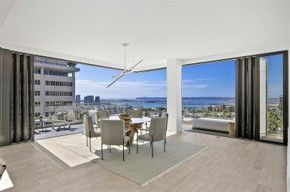
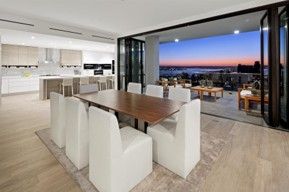
In high-end, owner-occupied condominium developments, ROI is driven less by retention and more by pricing, sell-through, and long-term value. Buyers in this segment prioritize spatial quality, natural light, acoustic comfort, and a strong connection to outdoor living as part of a long-term lifestyle investment. Operable glass wall systems are frequently used to open primary living areas directly to private terraces or balconies, effectively expanding the residence’s livable footprint. These expansive openings create signature moments within units while supporting premium positioning and buyer differentiation.
Images Courtesy of: NanaWall Systems
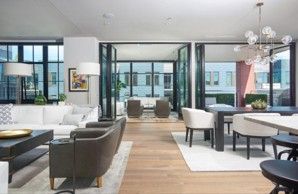
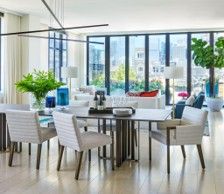
At 41 West, a mid-rise luxury condominium tower completed in 2019, folding glass walls open each residence to private terraces, creating light-filled homes with uninterrupted indoor-outdoor continuity. In dense urban settings where location often drives value, these design strategies help establish a strong sense of place and contribute to the project’s complete sell-out. Similarly, at Hayden West Loop, a 28-unit residential building in Chicago, folding glass walls open living spaces to private terraces ranging from 250 to 850 square feet. In a market where outdoor living is a rare amenity, these terraces function as true extensions of the home. The project achieved a sell-out before construction was complete, demonstrating how indoor-outdoor living can directly influence buyer demand in performance-driven climates.
Images Courtesy of: NanaWall Systems
Acoustic Control and Long-Term Performance
In urban and high-density environments, acoustic performance is a critical consideration for both rental and owner-occupied buildings. Exterior noise from traffic, transit, and surrounding activity is best evaluated using Outdoor-Indoor Transmission Class (OITC), which accounts for lower-frequency sounds that are more likely to penetrate façades. High-performance operable glass wall systems can be specified with specialized glazing configurations designed to improve OITC ratings, helping reduce sound transmission while preserving expansive openings. This balance supports quieter, more comfortable interiors without compromising daylight, views, or connectivity to outdoor space.
Beyond acoustics, long-term durability and climatic versatility are essential. Thermally broken frames, insulated glazing options, advanced gaskets, and robust sealing systems support energy efficiency and interior comfort across a range of climates. These features allow operable glass wall systems to perform reliably in high-wind, cold-weather, coastal, and urban environments, protecting long-term asset value.
Operable Glass Walls as a Strategic Differentiator
As multifamily development continues to diversify across rental and owner-occupied models, design strategies that expand usable space while maintaining envelope performance are increasingly central to financial success. High-performance operable glass wall systems support this goal by enabling true indoor-outdoor living across residential units and amenity spaces alike. When specified with attention to structural performance, acoustics, water management, accessibility, and climate conditions, these systems enhance flexibility, increase perceived space, and strengthen market differentiation. For developers and builders focused on ROI, careful consideration of fenestration performance is not just a design decision; it is a strategic investment in livability, durability, and sustained value.
By Liz Snyder, Director of Product & Industry Communications, NanaWall Systems




