










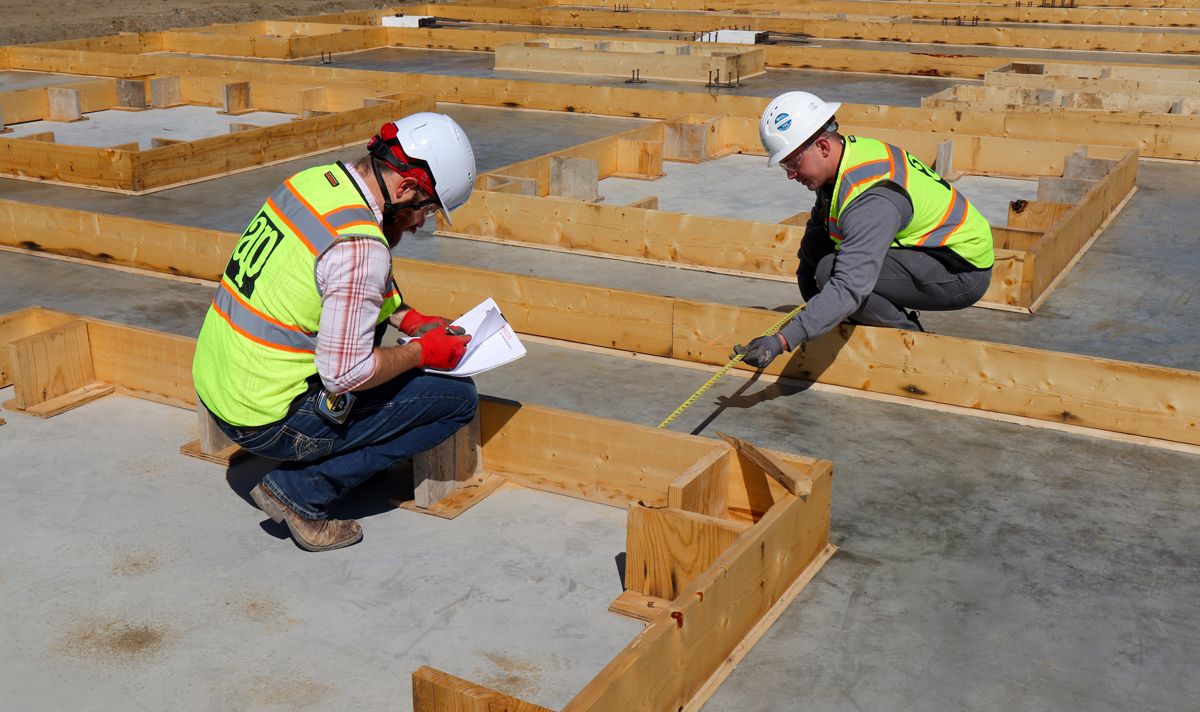
What began in 1946 as a small residential operation in the basement of George Adolfson’s Richfield home has grown, steadily and deliberately, into Adolfson & Peterson Construction (AP), one of the country’s leading commercial construction firms.
In the early years, Adolfson partnered with Gordon Peterson to build homes in Richfield before making a pivotal shift into commercial construction, a move that set the course for decades of measured growth. When Adolfson took full ownership in 1979, the company’s trajectory was already clear: build carefully, invest in people and let reputation do the talking.
That approach has defined AP through changing markets and expanding geographies. By 2012, annual volume surpassed $1 billion, reflecting not rapid expansion for its own sake but consistent demand from clients who value reliability and long-term partnership.
Today, AP is based in Bloomington and employs more than 700 team members, supported by thousands of subcontractors and trade partners across Arizona, Colorado, Minnesota, North Dakota, Texas and Wyoming.
Despite its scale, AP remains family owned and rooted in the same principles that shaped its early years. A focus on safety, quality and collaboration continues to guide work across commercial, education, healthcare, hospitality and other complex sectors. That balance between growth and consistency is what continues to set the company apart.
We sat down with AP Regional President Granger Hassman to get his thoughts on today’s construction landscape and where his company is heading in 2026 and beyond.
 Give us a snapshot of the Adolfson & Peterson Construction brand.
We are a national, family-owned construction management firm and longtime “ENR Top 100 Contractor.” With 75-plus years of experience, including 25 years in the Texas market, AP is known for quality, reliability, strong partnerships and a solid safety record.
What types of clients and markets do you focus on?
AP provides full preconstruction and construction services to owners, developers, city/county representatives and owner representatives across a wide range of market sectors, including aquatics and recreation, commercial/office, correctional, healthcare, higher education, hospitality, industrial, K-12 education, mission critical, multi-family, municipal, parking structures, senior living, tribal and water stewardship.
Our teams are spread across 12 different offices located in Arizona, Colorado, Minnesota, North Dakota, Texas and Wyoming.
How does your approach to building serve the needs of today’s end-users?
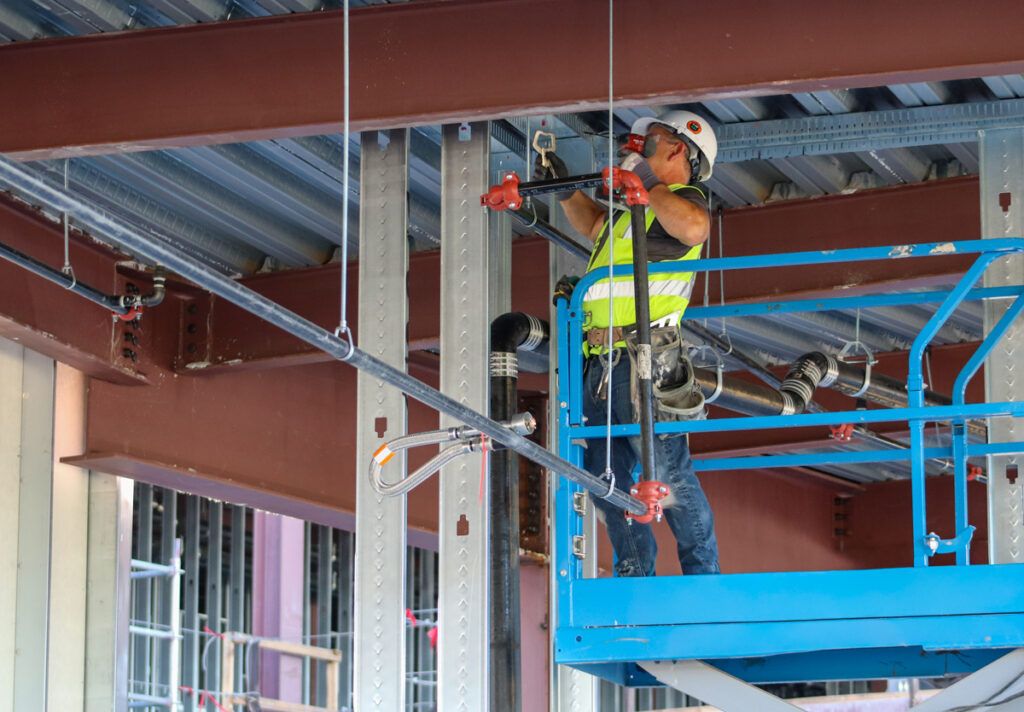
Our commitment to teamwork and integrity drives us to build not just spaces, but a lasting impression in the communities we serve. We use a combination of technology, field expertise and disciplined processes to ensure quality is included in every project from the start.
We understand the care we put into our work drives long-term value for its end users, in addition to our clients, partners and communities where we live and work.
What drives your construction strategy—efficiency, innovation, client collaboration or a mix of all?
A mix of it all, with quality woven through every phase of construction and safety at the forefront. Safety is everyone’s responsibility and that belief drives how we lead, plan and build.
What are some of the biggest challenges you face in delivering or renovating projects today?
Our challenges are no different than any other contractor in our market (labor shortages, budget pressures, material lead times, to name a few), which is why our services go beyond construction. We create value at every stage of the project lifecycle by bringing decades of experience, technical expertise and strong trade partner relationships to every project.
In addition, available power and proper infrastructure in the Texas market for data center projects.
How are you incorporating sustainability and resilience into your work?
Our sustainability commitment includes minimizing waste and maximizing reuse, improving efficiencies through process, optimizing energy outcomes through energy efficient strategies and advancing smart technologies.
 What trends are shaping the future of construction right now?
Interest rates and project viability are hot topics. While recent Federal Reserve rate cuts are a step in the right direction, a single cut is unlikely to cause an immediate, large-scale shift in privately funded projects. The cuts help projects “on the edge” of financial viability, but a sustained downward trend is needed to spur more significant activity.
When it comes to industrial and data center growth, the industrial sector, particularly in logistics hubs like the Dallas-Fort Worth (DFW) area, has been strong. A major focus area is the high demand for data centers, driven by artificial intelligence and the need for advanced infrastructure. We have been involved in significant data center projects in the DFW area.
Where’s your business headed in the next few years?
On a national scale, we are focused on continuous geographic growth and market expansion. Our teams are focused on the following emerging markets: mission critical and water stewardship. Our geographic growth is reliant upon where work is needed in those emerging markets, and where our clients take us across the U.S.
What makes your brand stand out in a crowded market?
Everything we do starts with a team that puts people first. Building on the power of people, we believe there’s no stronger foundation than teamwork and no substitute for integrity. Our culture empowers team members to grow beyond their comfort zones, follow their passions and achieve their goals.
How are you using technology and innovation to improve efficiency, safety and client outcomes?
AP utilizes digital tools to visualize, coordinate and plan by embedding VDC into all of our projects. This efficient and predictable approach allows our teams to reduce surprises and rework.
Can you share a client story or project that best illustrates your company’s capabilities and culture?
One of AP’s recent projects is the adaptive reuse project at downtown Dallas’ Santander Tower, converting 14 floors of former office space into 291 luxury multifamily units. Phase 2 of the project, adding 105 units across five more floors, recently started construction.
A conversion project of this scale in a traditional office building within a constrained downtown space, we encountered challenges that required teamwork, agility and a willingness to pivot as needed. AP learned a lot in the first phase of this project that will continue the strong success into the second phase.
Santander was an active mixed-use property with office, hotel and retail. Working in an occupied mixed-use building meant AP had to install plumbing overnight and that wasn’t the only night and off-hours work. AP collaborated closely with the owner, architect (WDG) and other partners to seek solutions that were in the best interest of the project.
From phone lines that ran into closets five floors up to aged and out-of-level slabs, the construction team learned many lessons, especially related to addressing the unexpected. There were some great discoveries along the way, such as when a core space demolition uncovered a wide-open floor span in the building’s core that became a pickleball court.
Phase 1 and Phase 2 continue to be an example of AP’s work with partners through transparency and collaboration.
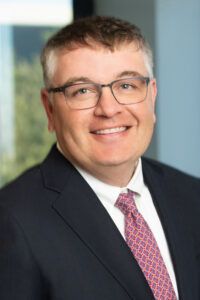 One-on-One with… AP’s Granger Hassman
Describe a typical day.
My typical day in one statement involves managing people, clients and calendars. Client engagement is a constant focus, involving regular communication and face time, ensuring satisfaction, proactive problem-solving and strategic discussions to align our services with their evolving needs.
What was the best advice you ever received?
The best advice I ever received was simple, “Work hard, never complain, be on time and know your role.” I’ve kept this advice with me for several years.
What’s the best thing a client ever said to you?
A client once told me that I was a positive difference-maker on their project. It was the RTX Corporate Campus at Cityline in Richardson, Texas. It made me feel like I was doing more than just my job. I was making a clear and definitive impact and adding value to a very complex and important project.




