









Opening one location is complicated enough. Opening nearly 20 in a year while simultaneously managing dozens of existing clubs turns development into an entirely different exercise.
That’s the challenge facing Undefeated Tribe, one of Crunch Fitness’ largest and fastest-growing franchise operators. With 51 locations operating and an aggressive pipeline ahead, growth increasingly depends on more than finding sites and building clubs.
Architects, contractors, vendors, developers and operations teams all need access to the same information while decisions, deadlines and potential problems move quickly across multiple projects.
J.B. Lacombe, VP of Construction & NCO at Undefeated Tribe, understood the challenge from previous experience scaling multi-unit portfolios. His response was to bring in SiteRise, a retail development platform designed to create a single source of truth across the development process.
Rather than chasing information across emails, spreadsheets and individual teams, Undefeated Tribe is using the platform to create greater visibility from design through construction and opening. The goal is straightforward but increasingly important as the pipeline grows: give everyone involved a clearer picture of what is happening, what comes next and where attention is needed.
We sat down with Lacombe and SiteRise CEO Dillon Okner discuss what rapid expansion looks like behind the scenes, where development programs begin to strain as volume increases and why better visibility may be just as important as speed when the mandate is to keep building.
Give us a snapshot of Undefeated Tribe and the strategy behind growing one of the largest Crunch Fitness franchise portfolios.
Lacombe: Undefeated Tribe has grown into one of the largest Crunch Fitness franchise operators in the country because we’ve been intentional about building the infrastructure to support long-term growth, not just opening clubs quickly.
We currently operate 53 locations and plan to open 20 or more clubs annually over the next seven to 10 years, which means we’re managing projects across multiple markets, municipalities and development stages simultaneously.
Our philosophy is that every new club should reflect the same quality and member experience, regardless of where it’s located. That requires standardized processes, strong partnerships, constant communication and great people across every stakeholder involved in development.
A big part of preparing for that growth has been intentionally building out our Construction and New Club Openings teams so we have the people and expertise in place to support that pipeline. Growth only works if your operational foundation and your team can keep pace.
We’re continuing to invest just as much in recruiting, developing, and retaining talented people as we are in improving our development processes.
Okner: What makes Undefeated Tribe unique is that they’ve approached development as a strategic business function rather than simply a construction process. As organizations scale, the complexity grows exponentially.
Every additional location introduces new vendors, jurisdictions, schedules, approvals and risks. The companies that continue growing successfully are the ones that invest early in the operational systems that allow them to maintain visibility and consistency across the entire portfolio.
 What attracted you to Undefeated Tribe and what have you learned about the Crunch Fitness brand since joining the team?
Lacombe: I was drawn to Undefeated Tribe because of its growth trajectory and its leadership team’s commitment to building the organization the right way. They weren’t simply focused on opening more clubs—they were focused on creating sustainable processes that would support growth over the long term.
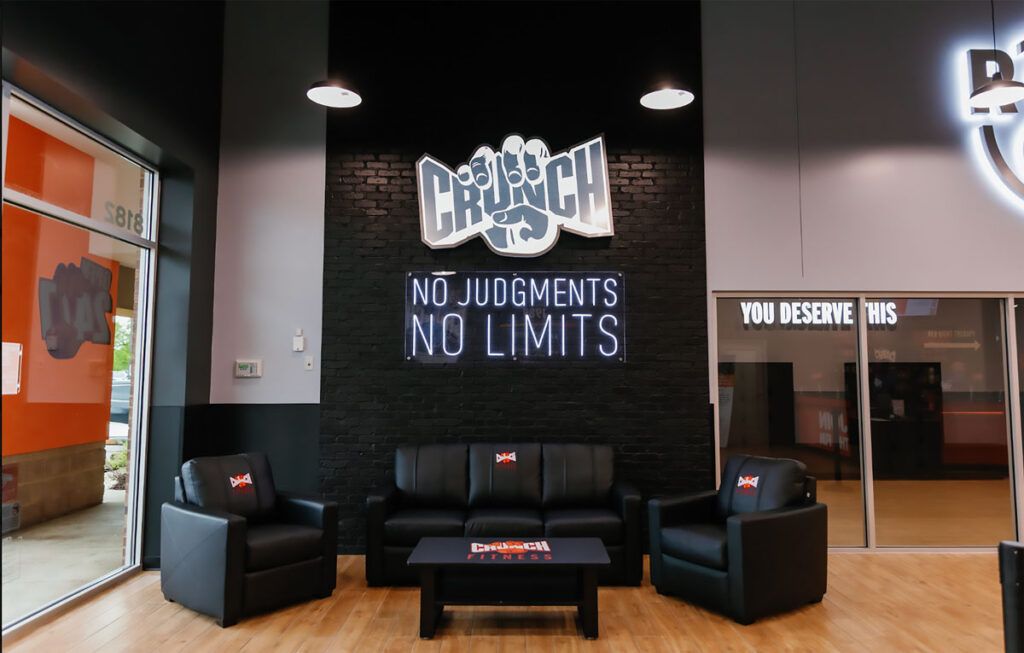
Since joining, I’ve developed an even greater appreciation for the Crunch brand. It’s an incredibly recognizable brand with a distinct identity that’s energetic, welcoming and accessible, grounded in its No Judgements philosophy.
Fusing fitness with entertainment to make serious fitness fun, we offer miles of cardio, awesome classes, tons of weights and an elevated experience, open and staffed 24/7 starting at $9.99 a month.
I’ve been really impressed by how much members can access at that price point. Every development decision ultimately supports that member experience, so there’s a real responsibility to deliver consistency across every location.
With 53 Crunch Fitness clubs operating and plans to open 20 or more each year for the next 10 years, what does it take to manage that level of growth?
Lacombe: Visibility, communication and discipline. Every project is moving at a different pace. Some sites are still being negotiated while others are going through permitting, construction, equipment installation or final inspections. You’re coordinating architects, contractors, landlords, consultants, equipment vendors, operations teams and executives, all with different priorities and timelines.
The biggest challenge isn’t managing one project. It’s understanding the health of the entire portfolio at any given moment.
Just as important is building a team that can grow alongside the business. As we continue expanding, we’re also growing our construction, new club openings, and CapEx teams.
Great processes and technology are important, but they’re only effective when you have talented people who enjoy what they do, understand the business, and are empowered to make decisions. That’s how you sustain this level of growth year after year.
Okner: That’s something we hear from virtually every growing retailer or franchise operator. Once you’re managing dozens of projects simultaneously, spreadsheets and email simply can’t provide the visibility leadership needs.
The organizations that scale most effectively are able to see where every project stands, identify risks early and make decisions before small issues become major delays.
What makes developing and building a Crunch Fitness location different from other retail or fitness projects you’ve worked on?
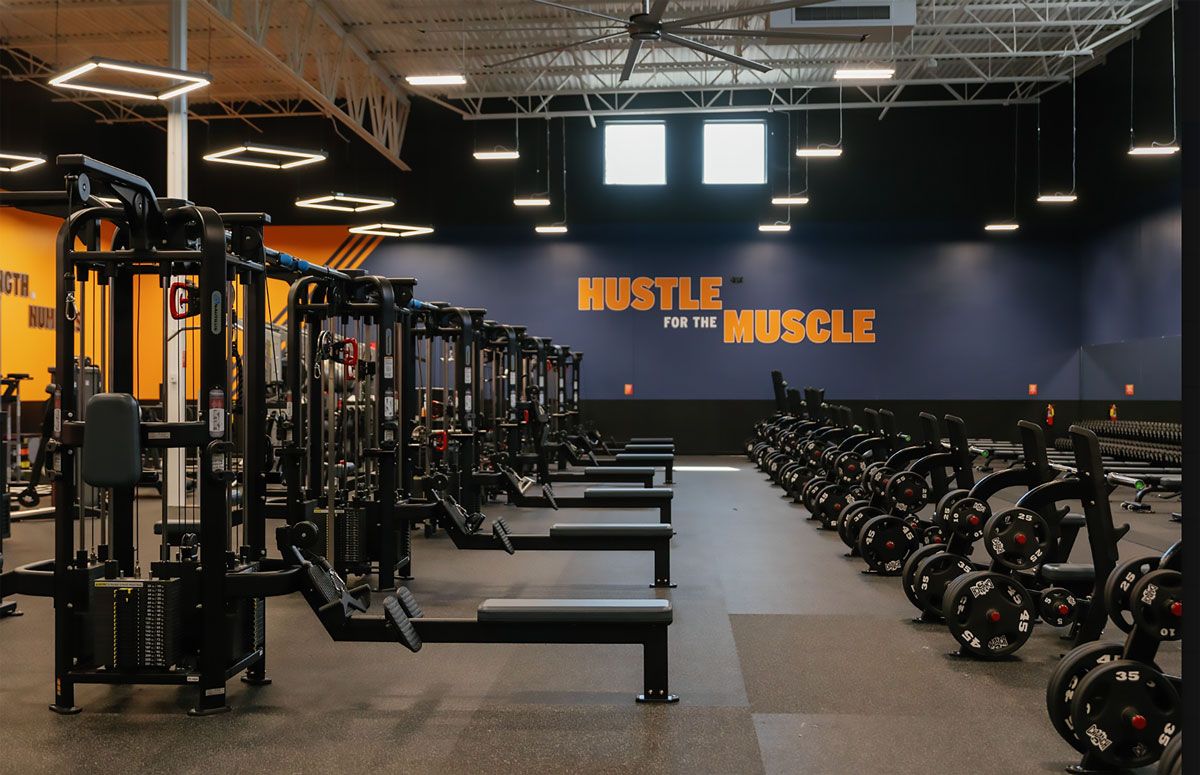
Lacombe: Fitness facilities are among the more complex retail environments you’ll build. You’re coordinating specialty fitness equipment, locker rooms, recovery spaces, group fitness studios, technology infrastructure, HVAC systems, branded environments and member amenities—all while delivering a space that’s operationally ready from day one.
That can include recovery offerings like HydroMassage and red light therapy, as well as a range of group fitness experiences, from Pilates and hot studios to Ride. Each brings its own design and operational considerations.
Unlike traditional retail, members interact with virtually every square foot of the building. Every development decision directly influences the customer experience, so attention to detail is incredibly important.
How does Crunch Fitness’ brand identity influence decisions around club design, layout, finishes, and the overall member experience?
Lacombe: The brand influences virtually every decision we make. Crunch has built its reputation around its No Judgments philosophy and creating an environment that’s fun, energetic, inclusive, and approachable. Whether we’re evaluating equipment layouts, finishes, lighting, circulation or recovery spaces, we’re always asking how those decisions support the overall member experience.
We’re evolving beyond traditional fitness to become a comprehensive wellness destination. By pairing world-class workout facilities with premium recovery experiences under one roof and one membership, we’re redefining what everyday gym-goers should expect from their fitness investment.
While every building has different constraints, the member will immediately recognize the Crunch experience regardless of which location they visit.
As the portfolio expands into new markets, how do you maintain a consistent Crunch experience while adapting each club to its individual site and community?
Lacombe: Standardization and flexibility have to coexist. Every municipality has different permitting requirements, every landlord has different expectations, and every building presents unique opportunities and challenges.
Our job is identifying where we can standardize our processes and brand standards while adapting intelligently to each site’s specific conditions.
That’s really where experience becomes invaluable. You learn which elements are non-negotiable and which can be adjusted without compromising the overall member experience.
You’ve said some of the biggest development bottlenecks occur before construction begins. Where do Crunch projects typically encounter those challenges and how do you get ahead of them?
Lacombe: Most schedule delays are created long before construction starts. They’re tied to lease negotiations, entitlement, permitting, utility coordination, design approvals, procurement and making sure every stakeholder is working from the same information.
By the time construction begins, many of the biggest decisions have already been made.
That’s why we spend so much time improving visibility during preconstruction. The earlier you identify potential issues, the easier—and less expensive—they are to solve.
Okner: That’s one of the biggest misconceptions in commercial development. People tend to think construction determines whether a project opens on time, but most schedule risk originates upstream.
If communication is fragmented or project information is spread across multiple systems, teams often don’t recognize delays until they’ve already impacted the schedule. Better visibility during planning and preconstruction allows organizations to become proactive rather than reactive.
How much of a successful Crunch Fitness opening is determined during site selection, planning, design, and preconstruction?
Lacombe: Honestly, I’d say the majority of it. Site selection influences operating costs for years. Design decisions affect constructability. Procurement impacts schedules. Early coordination determines whether contractors have the information they need to execute efficiently.
A well-planned project almost always becomes a smoother construction project. You can never eliminate every challenge, but thoughtful planning dramatically reduces surprises.
What have you learned about selecting and working with architects, contractors and vendors when opening Crunch locations at this pace?
Lacombe: One of the biggest lessons is that technical expertise is only part of the equation. We look for partners who communicate well, solve problems proactively and understand what it means to work within a fast-moving development pipeline.
When you’re opening this many locations, consistency matters just as much as capability. The best architects and contractors don’t simply execute a project—they understand the broader business objectives and recognize how their work impacts every downstream milestone.
 Strong partnerships are built on transparency, accountability and a shared commitment to keeping projects moving.
Okner: We see that across the industry. Successful development teams create ecosystems of trusted partners who understand each other’s workflows. Technology helps facilitate that collaboration, but ultimately it’s about making sure everyone has access to the same information and is aligned around the same schedule and priorities.
How closely do construction and operations work together to ensure a completed club delivers the experience Crunch members expect from opening day?
Lacombe: Construction and operations are completely intertwined. Long before a club opens, operations is thinking about staffing, training, equipment installation, merchandising, technology, marketing and member onboarding.
Development isn’t just about delivering a finished building—it’s about delivering a club that’s fully operational on day one. That requires constant communication between construction and operations throughout the entire process, not just at turnover.
What prompted you to implement SiteRise at Undefeated Tribe and what challenges were you trying to solve across the Crunch development pipeline?
Lacombe: I had worked with SiteRise in previous roles and had seen firsthand how much visibility it created across complex development portfolios. When I joined Undefeated Tribe, I was brought in to help support an ambitious long-term expansion strategy.
With plans to open 20 or more clubs annually for the next seven to 10 years, we needed a more scalable way to manage our development pipeline.
Information was spread across spreadsheets, emails, shared drives and individual conversations. Everyone had pieces of the puzzle, but no one had a complete picture.
With the pace we were growing, we couldn’t afford to spend time hunting down project updates or waiting for manual status reports before our weekly development meetings.
Implementing SiteRise gave us a single source of truth where executives, development teams, architects, contractors and operations could all see exactly where every project stood. Instead of chasing information, we could focus on identifying risks early, making faster decisions and keeping projects moving.
It’s also become a valuable onboarding tool. As we continue hiring across construction, new club openings and CapEx, new employees can quickly understand how projects are organized, where to find information and how our team works.
That consistency helps people get up to speed much faster and creates a better experience for everyone involved.
Okner: That’s exactly the problem SiteRise was built to solve. Development has traditionally been managed across disconnected tools, making it difficult for leadership to understand portfolio health or spot issues before they impact schedules.
Our goal isn’t to replace people’s expertise—it’s to give them better information. When everyone is working from the same source of truth, decisions happen faster, communication improves, and teams spend less time tracking down updates and more time delivering projects. For organizations growing at Undefeated Tribe’s pace, that visibility becomes a competitive advantage.
With architects, contractors, vendors, developers and operations teams involved, how has a single source of truth changed the way you manage projects?
Lacombe: It’s changed the conversation from, “Where does this project stand?” to “What do we need to do next?”
Instead of spending time gathering status updates from multiple sources, our team can immediately identify what’s on track, what’s at risk, and where we need to focus attention. That level of visibility allows us to be much more proactive.
It also creates consistency across the organization. Whether someone has been on the team for years or just joined, everyone is working from the same information and following the same process. That’s been incredibly valuable as we’ve continued to grow our team and onboard new employees.
Okner: Development is fundamentally a coordination challenge. Every project involves dozens of organizations, each responsible for a different piece of the process. When everyone has access to the same real-time information, accountability improves naturally.
It also gives leadership confidence because they can understand the health of the entire portfolio instead of relying on anecdotal project updates.
With dozens of Crunch locations at different stages of development, how do you know whether the overall pipeline is on schedule and performing as expected?
Lacombe: We focus on trends rather than individual projects.
Every development portfolio will experience occasional delays—that’s part of construction. What matters is understanding whether those delays are isolated or whether they’re revealing broader issues across permitting, procurement, design or construction.
Having visibility across the portfolio allows us to identify those patterns early and allocate resources before they impact multiple projects.
Okner: That’s one of the biggest differences between managing projects and managing a development portfolio.
Leadership needs to understand where systemic risks exist, not just whether Project A is on schedule. The ability to view dozens of projects together gives organizations much greater confidence in forecasting openings and planning future growth.
What has Undefeated Tribe learned from scaling Crunch Fitness that other high-growth, multi-location operators can apply to their own expansion?
Lacombe: Growth exposes every weakness in an organization. Processes that work well for five locations often don’t work for 50. The earlier companies invest in standardized processes, trusted partners, operational visibility and scalable systems, the better positioned they’ll be to grow sustainably.
I’d also encourage companies to invest in their people as early as they invest in their processes. Sustainable growth requires great systems, but it also requires hiring the right people, developing them, and creating an environment where they enjoy coming to work every day.
When you have a strong team supported by the right tools, you’re in a much better position to sustain growth over the long term.
Okner: I’d add that development shouldn’t be viewed simply as a construction function—it’s a strategic business function.
The organizations that scale successfully treat development as a competitive advantage. They invest in data, transparency and repeatable processes because they recognize that opening locations faster and more predictably creates meaningful business value.
As Undefeated Tribe expands its Crunch Fitness footprint, what excites you most about what’s ahead and how will the construction and development strategy evolve?
Lacombe: I’m excited about continuing to refine the way we build. Every project teaches us something new, and we’re constantly looking for ways to improve efficiency, strengthen partnerships and create even better experiences for our members.
Growth isn’t just about opening more locations. It’s about building an organization that’s capable of delivering 20 or more successful openings year after year.
That means investing in our people, developing future leaders, improving our processes and creating an environment where our teams enjoy what they do. If we continue doing those things well, we’ll be in a great position to support our growth for years to come.
Okner: Across the industry, we’re seeing development become much more data-driven.
Organizations want greater predictability, better forecasting, and real-time operational insight. I think the next evolution of commercial development will be giving leaders the information they need to make smarter decisions earlier in the process.
That’s ultimately how companies continue scaling while maintaining quality.
 One-on-One with Undefeated Tribe’s J.B. Lacombe
Describe a typical day.
There’s really no such thing as a typical day, and that’s one of the things I enjoy most about the role. One morning might start with reviewing development dashboards and project milestones before jumping into design meetings, contractor calls, permitting discussions or site visits.
By the afternoon I could be working with operations on upcoming openings or helping resolve challenges on projects in completely different markets.
Every day is about removing obstacles so our teams can continue making progress.
What’s the biggest item on your to-do list right now?
Delivering our current pipeline while continuing to improve the systems that will support the next phase of growth. When you’re growing this quickly, you have to balance today’s priorities with building the operational foundation that will support tomorrow’s expansion.
What’s the best advice you ever received?
“Slow down enough to speed up.”
Taking the time to plan thoroughly, communicate clearly and establish strong processes almost always saves significantly more time later in a project’s lifecycle.
What part of opening a new location still gets you excited?
Opening day never gets old. Seeing members walk through the doors for the first time and knowing that months of planning, design, construction and collaboration have resulted in a space that will positively impact the community is incredibly rewarding. That’s what makes all the work worthwhile.
Story by Michael J. Pallerino, editor of Commercial Construction & Renovation magazine. Over the past 30-plus years, he has won numerous awards, including the “Jesse H. Neal Editorial Achievement Award,” recognized as the Pulitzer Prize for business-to-business magazines. He can be reached at mikep@ccr-mag.com.




