








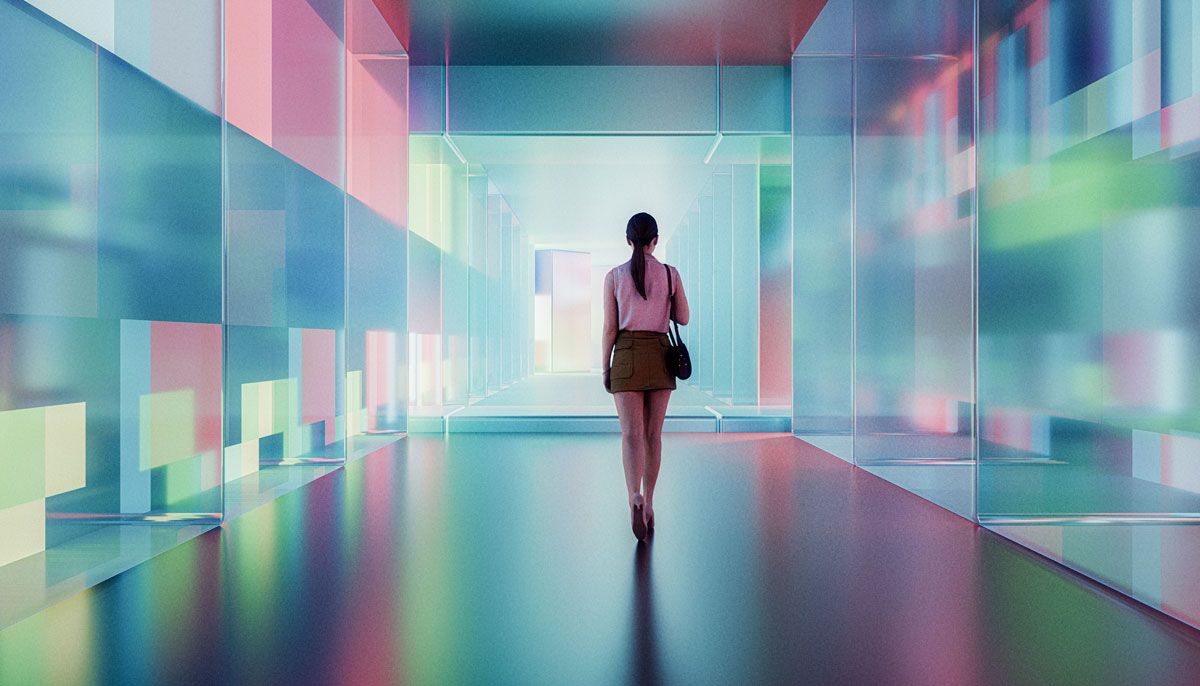
For decades, the built environment has been defined by permanence—steel, glass, and concrete shaped into fixed expressions of design intent. Value has traditionally been driven by location, architecture and tenant mix.
Today, a new layer is emerging—one that is less tangible, but increasingly influential: adaptive, intelligent experience.
Across cultural institutions, technology platforms and early-stage real estate applications, a shift is underway. Buildings are no longer conceived solely as static assets. They are beginning to function as responsive systems—capable of sensing, adapting and evolving over time.
From Installation to Infrastructure
The roots of this shift can be traced to the art world.
Artists such as Refik Anadol have transformed how audiences understand the role of digital media in physical space. His large-scale data-driven works—presented at institutions like the Museum of Modern Art and the Los Angeles County Museum of Art—use machine learning to create continuously evolving visual environments.
These works do not “repeat.” They behave more like systems than objects.
A similar philosophy is emerging among a new generation of generative artists working at the intersection of data, environment and human interaction. Rather than producing singular outputs, they design frameworks that continuously generate variation—systems that respond to presence, input and context.
“I design systems rather than fixed images.” — Ronen Tanchum
As Ronen Tanchum describes his own practice:
“I design systems rather than fixed images. The artwork evolves through algorithms that continuously generate new visual states. AI enables us to turn human presence into a dynamic system. The algorithm continuously responds to movement and behavior, generating environments that evolve in real time. Over time, this creates a recognizable imprint. The space begins to reflect the people within it, shifting the experience from passive viewing to a sense of ownership, value and belonging.”
This distinction is subtle, but profound. Art, in this context, is no longer something placed within a space. It is something that behaves within it.
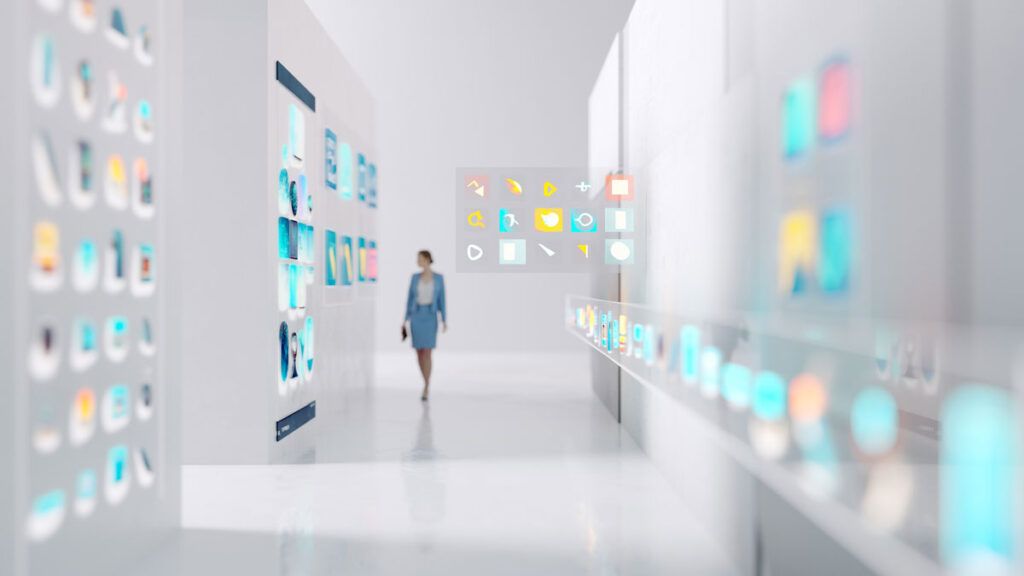 The Emergence of Experiential Systems
As these practices move beyond museums and into the built environment, a new interdisciplinary field is taking shape—one that blends:
- Generative art
- Artificial intelligence
- Spatial design
- Experiential strategy
Creative technologists and experiential designers are translating these artistic systems into functional applications within real estate—where environments can respond dynamically to data, occupancy and human interaction.
This evolution marks a shift from designed space to designed behavior.
In recent large-scale installations, generative systems have demonstrated how environments can respond to real-time inputs—transforming data such as weather, movement or sound into immersive spatial experiences.
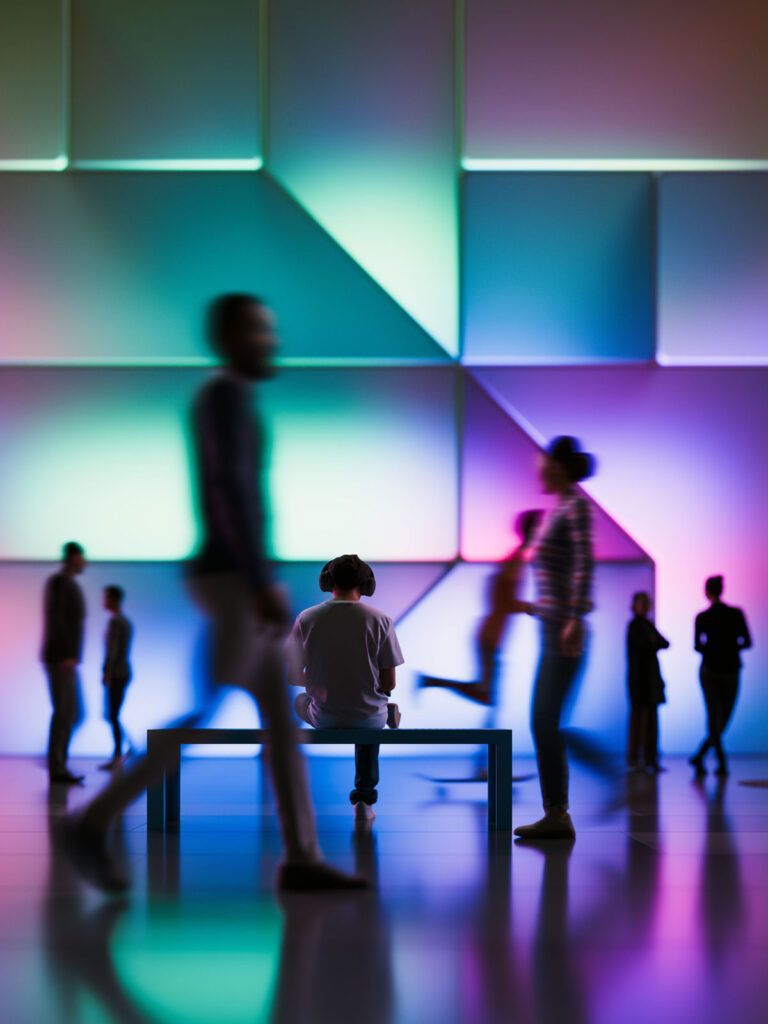
In one such example, human movement directly influences a digital atmosphere, where “each gesture” alters the surrounding environment, effectively turning space into a responsive ecosystem.
Why This Matters for Owners and Developers
While the cultural implications are compelling, the commercial implications are becoming increasingly relevant.
1. Differentiation That Evolves Over Time
Adaptive environments introduce variability—spaces that change continuously rather than remaining fixed. This creates a sustained sense of novelty that traditional design alone cannot achieve.
2. Measurable Impact on Engagement
Immersive and responsive environments across retail and hospitality sectors increase dwell time and interaction—key drivers of commercial performance.
Generative systems extend this by ensuring that environments remain continuously engaging, rather than becoming familiar.
3. Programmability and Lifecycle Efficiency
Unlike physical renovations, generative systems can evolve through software. Visual environments, interaction models and experiential layers can be updated without reconstruction.
This introduces a new form of long-term adaptability. Spaces that remain current without being rebuilt. This has significant impact and relevancy for commercial tenants and brand storytelling, personalization and engagement.
Applications Across Asset Classes
The integration of generative systems is beginning to emerge across sectors:
Cultural Institutions. Museums continue to lead, using generative environments to create immersive exhibitions that encourage repeat visitation and deeper engagement.
Hospitality. Hotels are experimenting with adaptive environments that shift in tone throughout the day—aligning with guest behavior and circadian rhythms.
Retail and Mixed-Use. Developments are exploring responsive environments that adapt to audience patterns, enhancing both engagement and commercial activity.
Residential. In high-end residential settings, digital environments are introducing new forms of personalization—allowing occupants to influence the atmosphere of their surroundings in real time.
A Convergence of Disciplines
Delivering these systems requires collaboration across fields that have historically operated independently:
- Artists and creative technologists
- Architects and designers
- Software engineers and data specialists
- Developers and asset managers
This convergence reflects a broader shift in how environments are conceived—not simply as physical structures, but as integrated systems of design, technology and human experience.
 Implementation: From Concept to Asset Strategy
For developers and investors, the path forward is becoming clearer:
- Integration with Data Systems. The most effective generative environments are connected to real-time inputs—occupancy, environmental conditions and behavioral data.
- Content as an Ongoing Layer. These systems require continuous evolution rather than one-time installation, introducing a new operational model centered on iteration and refinement.
Evolving Cost Structures
While initial implementation may require specialized investment, long-term efficiencies emerge through reduced need for physical redesign and extended asset relevance.
Emerging Revenue Opportunities
Dynamic environments create opportunities for:
- Branded experiences
- Programmable activations
- New forms of digital-physical engagement
Over time, this suggests a shift where experience becomes not only an amenity—but a potential value driver.
Imagine a space which is programmed to the art, color, lighting and nature elements which align with the resident, tenant. Digital wallpapers, generative artscapes and uniquely branded, responsive environments.
A New Definition of Value
The integration of generative art, AI and experiential design does not replace traditional real estate fundamentals—it expands them.
Buildings will always be defined by their physical form. But increasingly, they will also be defined by their capacity to evolve. Generative systems create a single system which can personalize, customize and deliver unique multiplicity redefined by the people and experiences they desire and, ultimately redefine how value is perceived within the built environment.
What began in museums and experimental installations is now informing how we think about space at scale. As generative technologies mature, the distinction between digital and physical environments will continue to blur.
The most compelling spaces will not be those that are fixed in time, but those that remain responsive, adaptive and alive.
In this emerging model, buildings are no longer static assets. They are living systems—capable of evolving alongside the people who inhabit them.
Michelle Collins is founder and CEO of A Non-Agency®, a consumer experience marketing design consultancy based in New York.




