










Few sectors are reshaping the built environment as rapidly as data centers. Fueled by artificial intelligence (AI), cloud computing and an ever-growing demand for digital infrastructure, developers, contractors and communities are racing to keep pace with unprecedented growth.
Yet behind every new facility lies a complex web of contracts, regulations, risk management strategies and construction challenges.
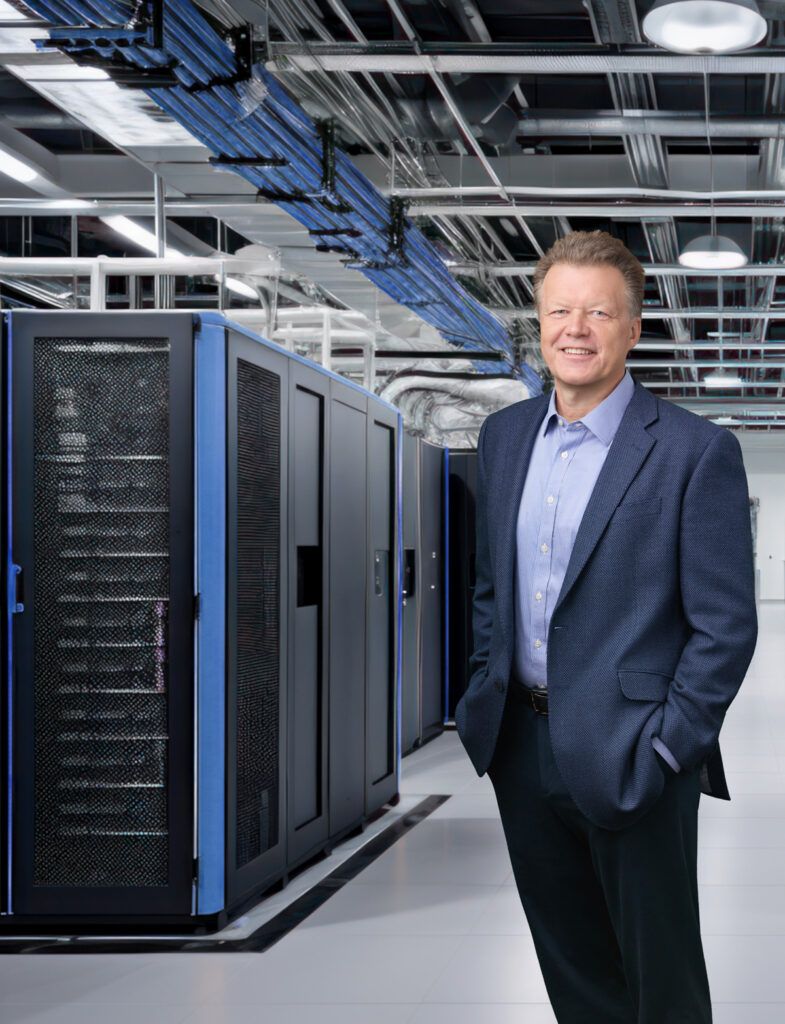
Jeff Hamera brings a unique perspective to that conversation. A Construction Partner at Duane Morris and former professional engineer, Hamera advises owners, contractors, designers and developers on some of the industry’s most complex projects, including data centers across the country. His dual background in engineering and law provides a practical understanding of how projects move from concept to completion.
We sat down with Hamera to discuss the opportunities, challenges and future of America’s data center boom.
 Give us a snapshot of your company and its role within the data center sector.
Duane Morris is a full service, international law firm with more than 900 attorneys in 29 offices across the U.S., in London and Southeast Asia. Our attorneys practice every area of law impacting data centers, including Energy, Engineering and Construction, Real Estate, Environmental, Intellectual Property, Employment, and others.
Duane Morris has developed a cross-disciplinary Data Center and Digital Infrastructure group that provides legal services to clients in the data center space throughout the project lifecycle—providing guidance and support on power agreements, regulatory compliance, site development, financing and incentives, engineering and construction agreements, litigation and dispute resolution, and more.
What types of clients and projects are you primarily targeting in today’s marketplace?
Our attorneys’ breadth of capabilities and depth of experience allow us to support a wide variety of engineering and construction projects—particularly in the data center sector, which is an increasingly important focus for clients.
Broadly speaking, we represent project owners, operators, designers, construction managers, contractors, and lenders in projects spanning energy, industrial, commercial, public works, transportation, mixed use and multifamily residential projects.
Within the data center sector specifically, we represent owners and operators of large data center developments and campuses, as well as large contractors and construction managers with a national presence building large data centers.
How are evolving technologies such as AI, cloud computing and hyperscale demand influencing the way facilities are being designed and constructed?
These demands are accelerating both the pace and scale of development. Data centers now require flexible project delivery methods that allow the developer, designer and contractor to adapt to shifting scope, procurement constraints, labor supply and utility availability in an evolving regulatory environment.
The growing scale and volume of data center projects has increased competition for sites with a combination of access to energy, water and space, along with connectivity to end users. Design priorities continue to balance demand for more computing power, and improved energy efficiency, cooling systems and scalability.
To move faster, parties are increasingly using Master Services Agreements for construction work to streamline contracting and accelerate project delivery timelines. Surging demand has strained equipment and material procurement and labor resources, creating a clear advantage for contractors that have established relationships and can reliably manage procurement and workforce challenges.
How has the rapid growth of data center development changed the way you approach project management, scheduling and execution?
It’s critical to secure early procurement of long lead time items. Rapid growth also has intensified the importance of long-term relationships among project participants—owners, developers, operators, designers, contractors and subcontractors—along with building in flexibility to resolve disputes quickly so parties can continue building the next project, rather than fighting about a prior project.
Rising energy demand is also pushing developers to pursue behind-the-meter generation when utility and supply grid fails to keep pace. The ability to secure orders for mechanical equipment for cooling systems and electrical equipment, such as switchgear quickly, often in advance of having a completed contract, is often key to timely delivery.
Contractors with established relationships with subcontractors in key regions have a competitive advantage in delivering the skilled electricians, mechanical contractors, ironworkers, and other tradespeople in sufficient quantities to meet aggressive schedules.
 What factors are most important when selecting a site for a new data center project?
Electricity, water and space remain the primary. Proximity to end users and internet connectivity can also be significant, depending on the use case.
These factors make both greenfield sites and repurposed industrial, office park and commercial space attractive. At the same time, growing community resistance to data center construction complicates the siting of new projects—pushback ranges from grassroots NIMBY movements to municipal government zoning denials to state law restrictions—often requiring coordinated government relations strategies, which Duane Morris can also support.
What’s your company’s short-term strategy? Long-term vision?
Our long-term vision is focused on understanding our clients’ evolving needs and aligning our platform—across practices, industry groups, and interdisciplinary teams—to deliver responsive, cutting-edge services that support our clients’ business goals.
Our immediate strategy is to execute on that vision in the near term by providing end-to-end legal services across the data center project lifecycle. We support that effort through our existing legal departments – Trial, Corporate, Real Estate, etc.; our Big I Industry Groups – Engineering & Construction, Energy, Technology, et al; and our interdisciplinary Data Center and Digital Infrastructure Group, which is led by Robert Montejo.
Together, those approaches marshal the legal experience that our attorneys have developed over the years while also allowing us to add data center-specific expertise as the need and opportunity arises.
What’s the best piece of advice you can offer owners, developers and contractors navigating today’s fast-moving data center landscape?
Success in today’s environment comes down to strong teams, fair risk allocation and disciplined execution. The industry is in a growth stage, so participants can maximize opportunities—and ensure repeated success—by maintaining partnerships of experienced, capable parties and focusing on fair, mutually beneficial relationships.
That means using contracts with reasonable risk and reward allocation, and administering projects to minimize (and quickly resolve) disputes. It’s critical to avoid parties who are unable to keep up rigorous demands on schedule, procurement, quality and finances. Learn as you go, incorporating those lessons into the next opportunity.
What makes a successful modern data center build from both a construction and operational standpoint?
The defining goal is speed—getting facilities built and operational quickly—while maintaining quality and cost discipline. The challenge that separates data center construction from the rest of the field is your ability to quickly and successfully quickly securing resources such as energy, water, sites, equipment, component construction management and skilled labor.
That requires flexibility, whether it’s implementing new technologies, adjusting to regulatory changes, adapting procurement methods for long lead-time items, or preserving relationships with qualified contractors and subcontractors.
Walk us through your construction and design strategy. How do you balance speed-to-market, reliability, scalability and efficiency?
Our approach centers on clear, consistent allocation of responsibilities across design, procurement, and construction. We start by defining design roles—design-build, design-assist, or constructability requirements—and ensuring alignment across all project agreements.
Procurement roles also need to be defined. Some owners have the internal capability to procure equipment in advance and in volume, while others rely on contractors who have or must develop that capability and yet other projects turn to specialized procurement assistance.
Given the use of proprietary systems, it’s essential to have a clear division of responsibility for procurement and installation of the various components of a data center. Timely decision making and reliable funding also supports coordination across all levels of the project, from individual craft workers to subcontractors, general contractors and owners, to help keep timely delivery on track.
Give us a rundown of the typical layout and infrastructure considerations involved in today’s data center developments.
Access to energy and water are two of the biggest infrastructure considerations. The availability of sufficient acreage to support the scale of current data centers, and the need to be near urban areas or internet connections, also create tension.
These challenges are analogous to those that faced industrial facilities in the last center—which makes some former industrial and commercial sites ripe for data center development.
What are the biggest challenges currently impacting the construction side of the data center industry?
The biggest challenge is securing limited resources—long-lead equipment and skilled labor—quickly enough to meet surging demand as competition for both increased during to increased data center demand. Experienced contractors have developed procurement strategies for such items to address this challenge.
Some developers have taken on responsibility for procurement of long lead time equipment as well. The other resource for which the demand is surpassing supply is competent craft workers. Successful contractors develop and maintain relationships with subcontractors who they can use repeatedly.
Another strategy is to use joint ventures or “super-sub” relationships to leverage a partner’s subcontractor relationships, which can be particularly helpful when entering a new geographic market.
Talk about sustainability and energy efficiency. What initiatives, technologies or practices are you implementing?
Sustainability and energy efficiency programs still have an impact on some projects and can offer financing, grant and tax credits. Those are pursued most often by developers through power purchase arrangements and decision to develop renewable generating resources.
The economics and practical reality of limitations on energy and water availability are also driving innovation in sustainability and efficiency efforts industry-wide.
How important are resiliency and redundancy in today’s projects, and how are those priorities impacting design and construction decisions?
Resiliency and the need for redundancy are consistently important, to varying degrees, depending on the specific use case. The overriding concerns are energy grid limitations and technology-related vulnerabilities. The former is pushing developers of some data centers to generate their own power, so they can maintain more control over the reliability of the supply.
Additionally, cybersecurity and the potential for bad actors intentionally affecting operations is a growing concern, with implications for confidentiality and sourcing restrictions.
 What opportunities do you see ahead for the data center sector over the next several years?
The outlook remains strong, with continued growth anticipated for the next several years. Opportunities exist for companies that can solve the problems of energy supply, water resources, site locations, noise abatement in residential areas, and for those who can prevail in the battle to source equipment and skilled labor.
Adding generating capacity behind the meter, even with nuclear generating options, and minimizing the energy and water usage for cooling can also confer an edge.
*What trends are you currently seeing or expecting related to cooling systems, modular construction, prefabrication, AI integration or power demands?
Cooling requirements are both a primary concern for data centers and a driver of innovation. Operators are focused on the integration of cooling systems into server racks and reducing water and energy consumption. Portions of data centers, such as the server rack systems, lend themselves to modular construction and prefabrication.
Greenfield sites and large campus may be amendable to modular construction and prefabrication. But modular construction and prefabrication is not unique to data centers and has never quite fulfilled the theoretical efficiencies that people have envisioned in other industries.
Additionally, the need to abate the noise emitted from cooling systems is a significant concern for centers near residential areas and an important part of addressing community resistance to new data centers.
How are labor availability and supply chain issues affecting project timelines and execution?
Labor availability is placing increasing pressure on the cost and timelines for new projects, making reliable subcontractor relationships all the more important. What’s more, supply chains continue to be impacted by both unexpected and predictable factors. Force Majeure clauses have long had a place in addressing unexpected and unmanageable events, such as wars, cataclysmic weather, pandemics, and government actions, to one extent or another.
The negotiation about Force Majeure clauses, as well as delay claim procedures and liquidated damages clauses, have taken on a heightened importance in data center contracts due to the financial stakes involved and the volatile regulatory and international risk environments.
Supply constraints and demand predictions are also impacting supply chains but lend themselves to preparation and early execution to limit impacts on project.
What’s today’s data center client ultimately looking for in a construction and development partner?
Operators of data centers look for consistency and long-term relationships with developers and contractors who can manage the hurdles to bringing data centers online and manage the high volume of work, time constraints and multiple projects. Clients also value a long-term, team-oriented approach—versus a one-off, transactional mindset.
Tell us what makes your company unique within the highly competitive data center construction market?
Duane Morris offers a distinctive ability to advise across the full lifecycle of data center projects and relevant stakeholders. Our multidisciplinary team supports everything from planning, financing, and development through contracting, operations and dispute resolution.
Our attorneys are also skilled at advising clients about dispute resolution and avoidance, and counsel data center parties including owners, lenders and other financiers, developers, designers, contractors, construction managers and insurers. We also advise on issues such as intellectual property, employment, and government relations that often arise with data centers.
Our geographic reach also sets us apart—we couple attorneys with subject matter experience and those with experience and an established presence in specific locations. We are organized to understand, respond to and facilitate the business of our clients.
Interview by Michael J. Pallerino, Editor of Commercial Construction & Renovation magazine. Over the past 30-plus years, he has won numerous awards, including the “Jesse H. Neal Editorial Achievement Award,” recognized as the Pulitzer Prize for business-to-business magazines. He can be reached at mikep@ccr-mag.com.




