








Frankie Campione has never been especially interested in doing things the way they have always been done. That mindset has helped shape CREATE since he founded the New York City architectural firm in 1996.
Built around a boutique model that keeps its principals closely involved in every project, CREATE has grown by pairing design expertise with something Campione believes matters just as much: understanding what clients are actually trying to accomplish.
For nearly 30 years, the firm has worked across architecture, interior design, master planning and urban design while also bringing capabilities in graphics, identity design, furniture, casework, renderings and other creative disciplines to the table. The broader toolkit reflects CREATE’s approach. Design is not something layered onto a project at the end. It is part of solving the business problem from the beginning.
At the center of that philosophy is a simple mantra: “Service, Quality and Attention.” For Campione, those words extend well beyond drawings and renderings. They mean listening, asking questions, understanding context and building relationships designed to last beyond a single assignment.
It is an approach that has allowed CREATE to remain intentionally small while working with developers and retailers on projects throughout the country and beyond.
We talked with Campione about his path to architecture, retail design’s evolution and the lessons in leadership, technology and relationships that continue to shape CREATE.
What first inspired you to pursue a career in architecture and retail design?
I was eight years old when I decided I was going to be an architect and never wavered. I had a wonderful art teacher in elementary school, Mr. Gary Gaccione, who taught us how to draw floor plans and both one- and two-point perspectives.
He saw something in me and kept pushing me further. We added textures and color and he had me bring in wallpaper samples from home and collage them into the perspective.
He explained what architects did and from that point forward, whenever anyone asked what I wanted to be when I grew up, the answer was always the same—architect. I keep in touch with Mr. Gaccione and in fact just spoke to him recently. A few “Brady Bunch” reruns probably didn’t hurt the cause either.
My mother tried to dissuade me. She offered me a Corvette for my 16th birthday if I would consider becoming just about anything else. Doctor. Lawyer. Dentist. Accountant. All sounded much safer to her. She felt architecture was a “who you know, not what you know” business and we didn’t know anyone.
Fortunately, I’ve always been a Ford guy. Later, she even recruited an architect working on an expansion of her company’s facility to let me spend time in his office, presumably so he could talk some sense into me.
On my first day there, I caught a dimensional error on a drawing by others. That afternoon, he walked me back to my mother’s office and said, “I have bad news for you. He’s going to be an architect.”
That man was my mentor, Robert Levin. And he was right.
 Give us a snapshot of your firm’s story and the mission that drives your work.
Which story? There’s the one where I was out on a Friday night with my wife and friends, had a few drinks and decided I’m quitting Monday and starting a firm. We named the firm right then and there—CREATE.
There’s another where I always knew I would have a firm. It was just a matter of when.
So, it began in 1996 with a pretty simple idea. Find work, get work, do work, find more work. Not a Georgetown business school model, but it’s worked so far. The philosophy was pretty simple and one I had already noticed was being neglected by others. Provide clients with the level of service I thought they deserved and make good design part of solving their business problem, not something applied afterward.
Thirty years later, we’re still a relatively small firm by choice, working on projects throughout the country and occasionally beyond. We’ve been fortunate to work with some of the most respected developers and retailers in the industry, but I’ve never wanted CREATE to become so large that our clients stop knowing who is actually holding the pencil.
Two phrases probably describe us better than any mission statement and interestingly, both came from clients.
One called us “The Developer’s Architect.” He recognized that while we’re architects and designers, we approach the project from the developer’s point of view. Design matters enormously, but so do schedule, budget, leasing, constructability, operations and return on investment.
Another client once told me our work was easy to sell internally because what we presented wasn’t architectural fluff or an artist’s concept accompanied by disclaimers. What we drew actually got built. His words were, “It’s just like the rendering.”
We borrowed both.
Our mission really hasn’t changed. Listen, remain curious, respond, solve the problem and deliver what we promised.
How has the role of retail architecture changed over the past few years?
Retail architecture used to be largely about the building. Today, it is about everything that happens around, between and because of the buildings.
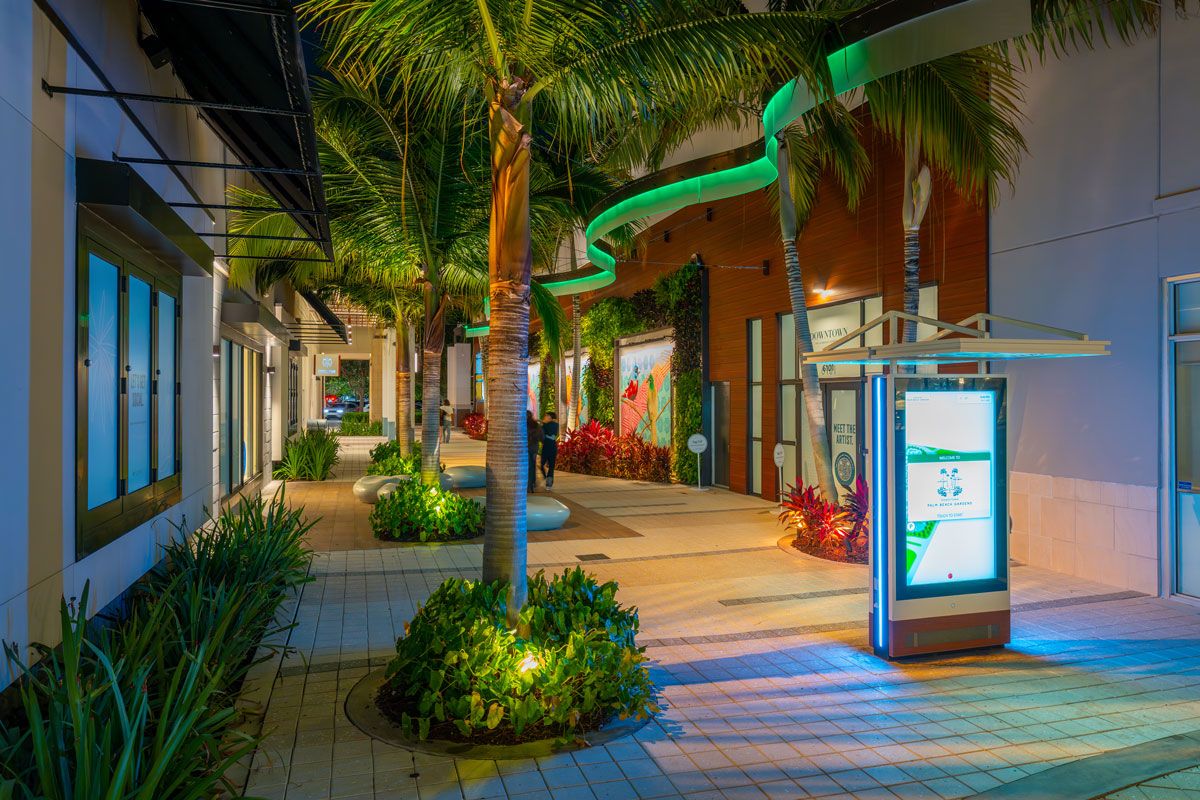
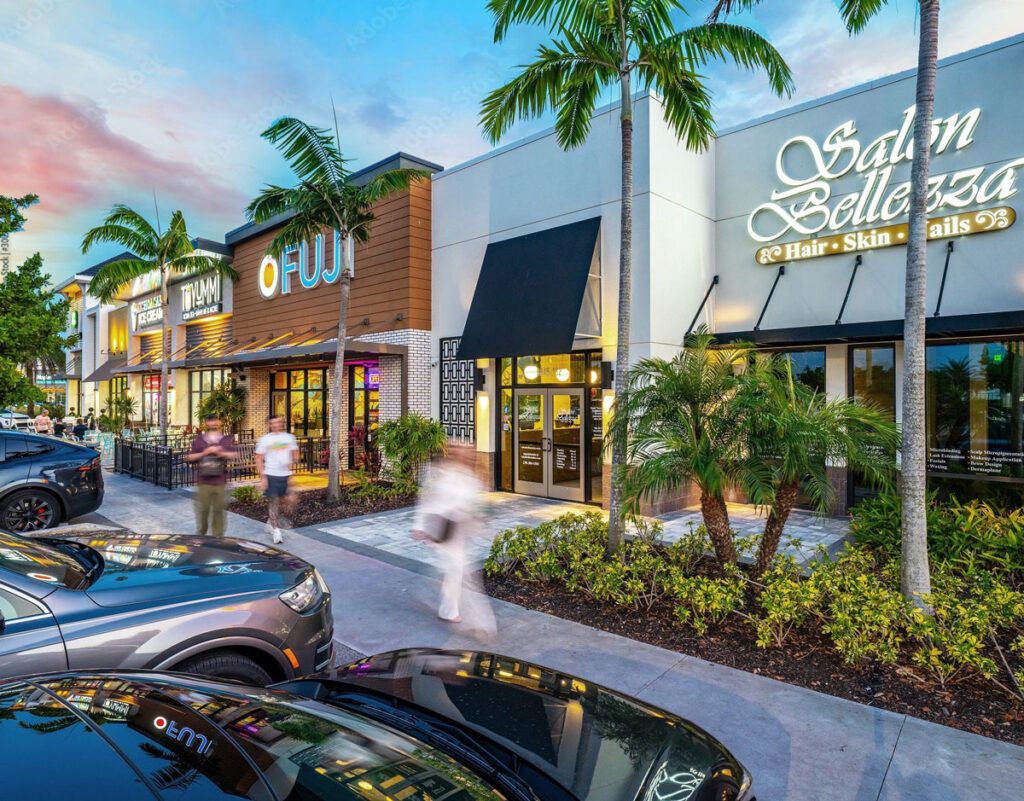
The most successful retail environments have become social environments. We’re thinking about food, gathering, shade, landscape, events, public art, outdoor rooms, pedestrian movement and how someone feels walking through a place just as much as we’re thinking about storefronts and facades.
E-commerce didn’t eliminate physical retail. In many ways, it forced physical retail to become better. If someone can buy almost anything from their sofa, we have to give them a reason to come.
Architecture has become part of CREATE-ing that reason once again.
What do today’s retailers expect from an architect beyond designing an attractive space?
They expect us to understand their business. An attractive building that doesn’t lease well, operate efficiently, meet budget, accommodate signage, navigate approvals or get built on schedule isn’t a successful retail project.
We need to understand what the retailer needs, what the developer needs, what the contractor needs and ultimately and perhaps most importantly, what the customer needs. Those aren’t necessarily the same thing.
When I tell our clients we’re their pencil, it’s because we are. Bring us the problem, the program, the crazy idea or the site no one else can figure out. Our job isn’t simply to draw what we are told. It is to listen carefully enough to understand what they are actually trying to accomplish and then help them get there.
When you begin a new retail project, what are the first factors you consider?
Since we do mostly developer-driven retail, the first factor we consider is context. Before we start designing, I want to understand the place, the customer, the climate, the architecture around it, what already works and a lot of times, what doesn’t.
We ask a lot of questions. Why does someone enter here? Do they have to? Where do they park? Where will they naturally gather? Is this being forced? What will they remember? What is authentic to this particular place?
I’ve never been interested in taking a successful design from Florida and dropping it in Connecticut because someone liked the rendering or saw that it looked good elsewhere. If we do our job correctly, the project should feel like it belongs exactly where it is.
How do you balance brand identity, customer experience and operational efficiency in your designs?
I don’t think of them as three separate things that need to be balanced. The best solutions make them reinforce one another. Brand gives a project personality. Customer experience determines how people engage with it. Operations determine whether it actually works every day.
If one dominates the other two, you usually feel it. The architecture becomes theatrical, the experience becomes inconvenient or operations begin dictating an environment nobody particularly wants to visit.
The goal is for none of them to feel forced. When it’s right, most shoppers will never know why it works. They’ll simply feel comfortable being there.
What retail design trends are having the biggest impact on the industry today?
I hope the biggest trend is that we actually move away from trends. The best retail environments put a greater emphasis on authenticity and local context and should not feel manufactured. Outdoor gathering continues to be important, but there has to be a “why here?” and it must be well thought out.
How many times have you seen a project with all the right pieces—a water element, a sculpture, amenities, etc.—all in the wrong place and not being used? They followed a trend but didn’t understand how to make it work.
Food and beverage has become an increasingly powerful anchor. It needs to be in the right place. Landscape has become integral to architecture rather than decoration.
I’m excited by the return of color, texture and personality. Trust me, black, white and gray is almost over and we can finally turn off HGTV after the countless episodes of farmhouse modern.
Clean architecture can be wonderful and again, there is a place where it is appropriate. We’ve done our fair share, but not all retail should look the same. People remember places with personality.
Sustainability continues to shape commercial construction. How are you incorporating sustainable strategies into your retail projects?
Tough subject for retail. I recall a developer pulling out a wad of bills and telling me, “Frankie, this is the only green we care about.”
But retail also presents an enormous opportunity through repositioning existing buildings. We continue to convert former department and big-box stores into smaller junior boxes and inline tenants, where we find entirely new lives for buildings that might have otherwise been demolished.
Codes have made most core decisions mandatory versus optional, so some of the most effective sustainable decisions aren’t necessarily the glamorous ones.
What technologies or innovations are changing the way retail spaces are designed and built?
We are living through one of the most interesting technological shifts in my career. BIM changed coordination and documentation. Visualization changed how clients understand projects before they are built. Reality capture, scanning and increasingly sophisticated modeling are helping us understand buildings with extraordinary accuracy.
But now AI is beginning to change how quickly we can explore ideas, visualize alternatives and communicate design intent. I’m excited about it, not threatened.
Technology can make us faster and give us more ways to explore, but it still needs judgment. AI can generate hundreds of images. The architect still has to know which one solves the problem or whether the right answer is image 101 that hasn’t been created yet.
If used properly, I see AI giving us more time to think, not less reason to do so.
What’s the key to creating a retail destination that keeps customers coming back?
Give them reasons to stay. Necessity may get them there, but experience keeps them there and memory brings them back. Sometimes it’s a restaurant patio. Sometimes it’s shade under a tree, a fountain, a comfortable place to sit or simply a pedestrian environment that makes wandering enjoyable.
Placemaking is now the most overused word in the industry and while we’ve used it our fair share as well, we like to think of developments from the hospitality side of things. We strive to create environments that work subconsciously.
You’ve never heard someone say, “The proportions of that outdoor space were excellent.” OK, maybe some architecture students studying in Florence. But most just say, “I really like that place.” That’s the win.
Can you share a project that challenged your team and what you learned from the experience?
One of the most challenging projects of my career ultimately taught me less about architecture than it did about what kind of architectural practice I wanted CREATE to become.
Coming out of the recession of 2009, we competed against much larger firms for the development of an extraordinarily successful retail destination. We approached the interview almost like a thesis project.
Rather than immediately showing pretty pictures, we studied why the center was difficult to navigate, mapped pedestrian behavior, identified dead ends and missing connections, questioned the existing districting and even challenged parts of the program.
We ultimately won the assignment and spent several years developing a comprehensive vision for the asset.
Then circumstances changed. We were asked to make a business decision that would have required us to limit who else we could work for within that sector. It represented an enormous amount of work and money for a firm of our size, particularly coming out of the recession.
I remember gathering much of our young staff and explaining what was happening. This wasn’t only my livelihood. This decision affected theirs too. I told them what I believed, but I also wanted them to understand the consequences.
Ultimately, we chose our independence. We lost a tremendous amount of work in the pipeline, including eventually that project. At the time, it was painful. Looking back, it was one of the most important decisions we ever made.
One of the client relationships we chose to honor instead grew into decades of opportunities together, including some of the most significant projects in our portfolio.
The lesson wasn’t about choosing the right client. It was about choosing what kind of firm we wanted to be. Sometimes the hardest project teaches you something that has nothing to do with architecture.
What leadership principles have helped you build successful teams and strong client relationships?
Treat people well. Answer the phone, although I never hear the mobile. Tell the truth. Admit when you are wrong. Share the credit. That’s why my name is not over the door. We’re a team.
And never forget this is a remarkably small industry.
People change companies. Competitors become clients. Clients become friends. Someone sitting across from you during a difficult negotiation may be sitting beside you on another project.
During COVID, when everything stopped, I made it a point of reaching out to almost everyone I had crossed paths with throughout my entire career, including some where things hadn’t always ended perfectly, simply to ask if they were okay. LinkedIn actually stopped my ability to message for a while.
My point is relationships shouldn’t only matter when there is a project attached to them. Internally, I also believe our team deserves to understand the “why.” If we’re making a difficult decision, I want our team to understand the reason behind it.
They don’t work for CREATE. They are CREATE.
Where do you see the biggest opportunities for innovation in retail architecture?
Again, speaking from the developer’s side of retail, the opportunities are the spaces between the buildings. We’ve become very good at designing individual pieces of architecture, but we do not need buildings that are visually appealing but not functional. The bigger opportunity is connecting them into places people actually want to inhabit.
The future isn’t another shopping center prototype. It’s creating places that can evolve as people’s lives evolve.
And I think curiosity is essential. The most dangerous phrase in design may be, “That’s how we’ve always done it.”
 What advice would you give to young architects who want to specialize in retail design?
Listen to “CREATE Worldwide”—the podcast. It’s from young design professionals for young design professionals. I have nothing to do with it other than paying for the platform. It’s where we let the youngest team members, recent grads, college interns and high school interns discuss everything and anything they are learning.
The idea behind it was to expose anyone thinking they want to be an architect to what they are getting into or if you are already in school, what you are about to embark upon when you graduate. It’s a glimpse inside the business, not just architecture.
Architecture schools are notorious for teaching absolutely nothing about business. One class in professional practice where they make false claims about fees being 20% of construction costs and flash a couple of AIA documents on screen. I’d love to teach that class somewhere one day.
Young architects need to learn the business behind what we do so they understand why a tenant wants 4,000 square feet instead of 5,000 square feet.
They need to understand that even the smallest delay on our part completing drawings dominoes down to the delivery date, turnover date, fixturing and stocking the store along with five others in the region—not to mention the number of new stores promised to Wall Street in a certain quarter.
Young professionals should walk construction sites and understand that while you inherently know a building because you worked on it for six months, the person in the field with an iPad or paper drawing knows only what you drew.
Talk to contractors. Listen to leasing people. Watch where customers walk instead of where you think they should.
Allow software to be a tool but not the end-all. It’s no different from when we went from plastic lead on Mylar to AutoCAD and now Revit, SketchUp, countless rendering programs and AI.
ChatGPT is the Scotch tape right now, but we use so many different platforms to facilitate a set of drawings and artificial intelligence (AI) should be thought about the same way. Use many platforms to solve the problem, but the end result should be all you.
Sketch and sketch some more. Don’t be afraid of the pencil. I can’t say that enough.
Perhaps most importantly, stay curious, remain eager and take nothing for granted. Thirty years later, I am thrilled when someone calls to award us a new project.
We have a drum set in the design studio and when we get that call, we go hit the cymbal. I hope I never lose that excitement.
How do you define success when you complete a retail project and what makes you most proud of the finished result?
A few years back, a fellow architect nominated me for Fellowship with the AIA. I didn’t get it. One of the obstacles was measuring success as a retail architect. I explained retail success isn’t about winning awards. It’s measured in sales per square foot. That’s not a tangible element for the architectural industry, which fancies itself with pretty pictures.
The measure is actually deeper than that. Sales per square foot means traffic. Lots and lots of it.
Our success is when the client succeeds. It’s when the place leases, people use it, the contractor can actually build what we draw and is still willing to have lunch with us and when the client calls us for the next project.
Of course I’m proud when a project wins an award and when we actually have time to submit for them. Who wouldn’t be?
But my favorite moments are much quieter. I was at a mall we renovated, just looking at the completed effort in the common area, when I overheard a mother and daughter saying how much they loved the transformation.
That right there is why I do what we do.
One-On-One With… CREATE’s Frankie Campione
Describe a typical day.
Good or bad? Luckily, most are good, which is why I love what I do. I’m all over the place and don’t need a lot of sleep. Dad said, “Rest when you’re dead.” He’s turning 95.
I can start the day reviewing a storefront in Florida, jump on a call about a renovation in New Jersey, sort through a master plan in Pennsylvania, type a proposal, problem-solve a call from the field that no one was expecting and somehow end the day looking at something nobody knew we were working on when the day began.
I tried giving up coffee. I’m down to a cup and a half a day. That’s not too bad.
I put family first, clients and office second and my physical health and appearance last. It’s starting to show. Might be time to think about a gym.
I don’t miss my son’s baseball games nor his podcast and apparently, I’m going to some Sorority Dad thing.
What’s the biggest item on your to-do list right now?
For a paperless world, I’ve still got a lot of paper. The pressing item is usually another proposal. Everyone asks, “Why don’t you pawn them off or delegate?” But by the time I mark one up and handwrite what needs to be included, I just type it myself.
I’m five years behind finishing our 25th anniversary book because apparently the shoemaker really has no shoes. Servicing our clients takes priority over producing a coffee-table book about ourselves, but we’re close.
Right now, I have a huge mall redevelopment master plan on my desk that needs character sketches and design direction, a former Kmart we are converting to a Whole Foods, an outlet center renovation we just got released on this morning and we’re renewing the office lease for another 10 years.
Should I keep going through the list? The reality is the biggest item on my list is making sure the next chapter of CREATE is at least as much fun as the first 30 and that all our clients, colleagues and team feel appreciated along the way.
What was the best advice you ever received?
I don’t know that there was ever one great line of advice. My parents taught mostly by example: honesty, integrity, humility. Work hard, treat people well and believe you can do something before you’ve completely figured out how you are going to do it.
There were plenty of expressions around the house, though one I still love is, “There is an eraser at the end of a pencil for a reason.”
We were encouraged to try and if we stumbled, they were there to catch us. I didn’t fully appreciate how much that shaped me until I became a father, a business owner and someone responsible for other people’s careers.
What’s the best thing a customer ever said to you?
Years ago, I was talking with the CEO of one of our longtime clients about the industry’s star architects and firms that had truly arrived. So naturally, I asked, “Well, have I arrived?”
“Not yet,” was the response.
Years later, I reminded him of that conversation and asked again. He looked at me and said, “Frankie, you had already arrived back then. I just didn’t want you to know it.”
I think he may have added something about keeping our fees down. I’m still not entirely sure I’ve arrived and maybe that’s a good thing. I still want us to approach every project with the feeling that we have something to prove.
I seriously still think of us as that Little Firm That Could, which got its start in a bar with a few friends coming up with the name CREATE.




