









Salim Chraibi sees an opportunity to make homeownership a reality for more of the people who help South Florida’s communities thrive. From teachers and healthcare professionals to the service workers who keep local businesses running, he believes everyone deserves a chance to put down roots in the places where they work and build their lives.
As CEO and Founder of Bluenest Development, Chraibi has made that vision the foundation of a company focused on creating quality, attainable homes for working families. And his approach goes beyond simply building more houses.
Since its founding in 2018, Bluenest has delivered more than 1,000 homes across South Florida, with another 3,000-plus units in its development pipeline. Along the way, Chraibi and his team have developed a business model designed to address some of the challenges that can make attainable housing difficult to deliver at scale.
A big part of that strategy is keeping more of the process under one roof. Through its vertically integrated model, which includes in-house construction, Bluenest maintains greater control over development costs, construction quality and project schedules. The company also works closely with buyers throughout the homeownership process, helping them navigate the steps between finding a home and receiving the keys.
For Chraibi, the bigger picture is about more than individual homes or developments. He sees housing as an essential part of a community’s infrastructure, one that helps support workforce stability, neighborhood growth and long-term economic opportunity.
And in a region where demand for attainable housing continues to grow, finding ways to build efficiently without compromising quality is becoming increasingly important.
We spoke with Chraibi about Bluenest’s approach to residential development, the advantages of bringing construction in-house and what it takes to create more opportunities for working families to call South Florida home.
 Tell us a little about yourself. What is your industry story?
My connection to real estate began in childhood, growing up in Casablanca, Morocco, in a family deeply involved in the industry. My mother, Nadia Daoudi, is an architect and land broker, while my grandmother was developing homes and apartment buildings as early as the 1960s.
She often told us to “stick to the rock,” her way of saying that land and real estate create enduring value. That philosophy stayed with me and ultimately shaped my career as a developer and the work we are doing today at Bluenest.
I came to the United States on a golf scholarship to Johnson & Wales University, intending to play professionally, and my brother, Kamil, went to Florida International University, planning on a career in technology. Real estate inevitably found its way back to us.
In South Florida, I realized that most developers seemed to be building $10 million, $15 million, $20 million mansions, but when I looked at the actual median income in Miami-Dade, I kept wondering where our teachers, nurses, police officers and the majority of Miamians were supposed to live.
From 2018 to 2020, we completed our first standalone homes and duplexes on small infill lots in Brownsville, West Little River and Liberty City, homes that sold within days of hitting the market. That signaled to me the demand was very real. Financing was the hard part at first, a family lender, London Financial, gave us our first construction loan, $650,000, back in 2018, when almost no one else would touch a project that size.
Those projects became the beginning of Bluenest.
What inspired you to establish your company? How has your founding mission evolved over time?
My inspiration for Bluenest came from hearing the same story over and over again. A teacher, a nurse, a first responder who wanted to buy a home in the community they served, but could not find anything they could afford, while builders around us were chasing $10 million and $20 million mansions. Miami-Dade’s home prices were climbing, and continue to, while workforce wages weren’t and aren’t keeping pace.
Most of the “affordable housing” being built was for rent, not for sale. That’s why I made it my mission to build for-purchase homes at attainable prices made for the people who keep this county running.
The mission hasn’t changed, but the scale and the tools have. We started with individual infill lots and no connections to U.S. real estate, no family reputation here to lean on, no built-in investor network.
Today, we’re vertically integrated, handling land acquisition, entitlements, construction and sales in house, and we built our investor relationships from scratch with South Florida family offices and high-net-worth individuals rather than inheriting them.
As an immigrant, I don’t take that for granted. It’s almost impossible to do what we’ve done in most other countries. You need a big market, buyers who are actually buying, and access to capital, and the United States gave us all three. What’s evolved is our ability to do this at real scale; we’re on pace to be delivering 1,000 homes a year by 2028.
Describe the signature style or characteristics that define your residential projects.
Two things define our projects. First, we design to context: at Redland Reserve, for example, our townhomes use a barn-style architecture, steep-pitched metal roofs, and façades that echo the farms and nurseries around the site, rather than dropping a generic suburban product onto agricultural land.
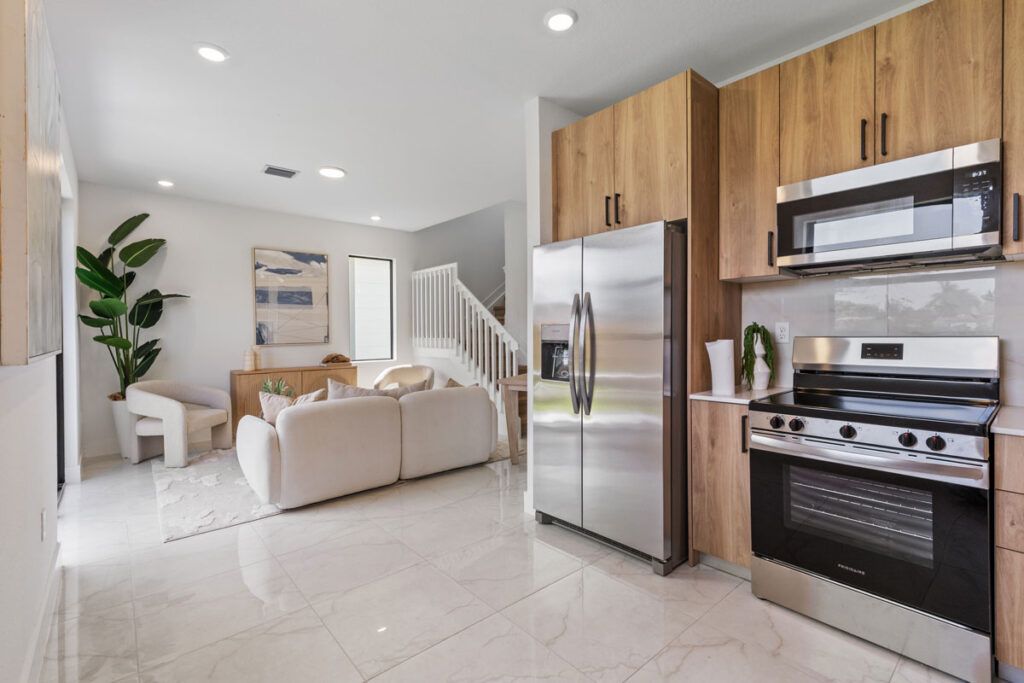
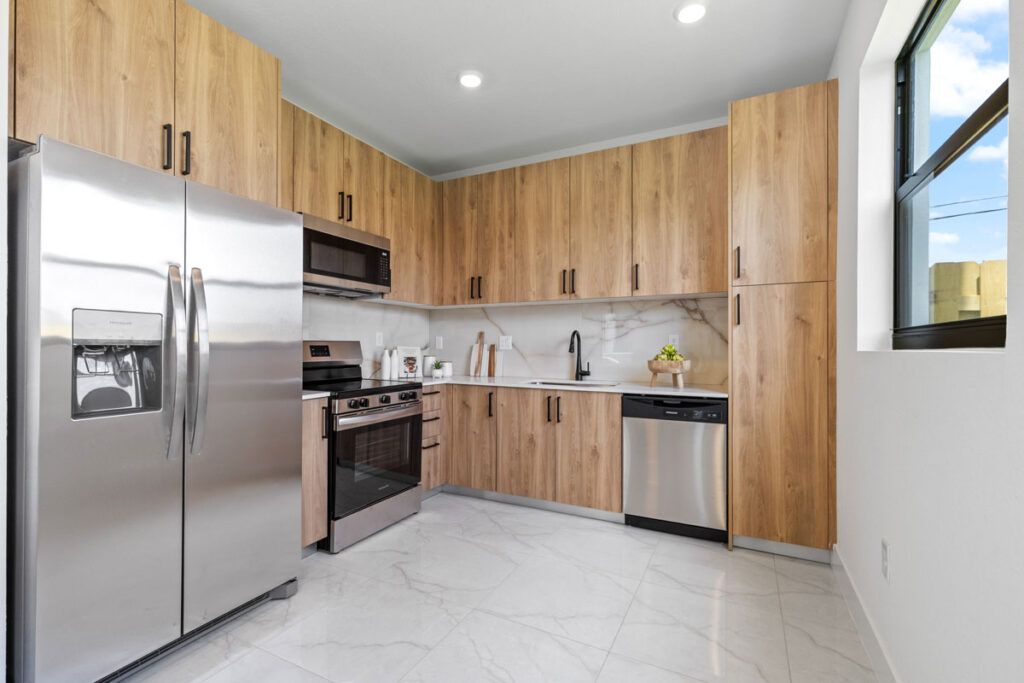
Second, every home carries finishes you’d expect in a $2 million house, not a workforce-priced one: impact windows and doors, waterfall countertops, higher ceilings, foyers with powder rooms, and upstairs “pajama rooms” where families can spend time together, not just a bedroom and a hallway.
We build almost everything around a compact set of repeatable, pre-approved three- and four-bedroom plans, typically around 1,900 square feet, adapted to each neighborhood’s character. That repeatability is what lets us hold the line on cost and permitting timelines while still delivering a home that looks and feels like a move-up product.
What types of residential projects do you specialize in? What market segment do you primarily serve?
We specialize in ground-up, for-sale residential communities, mainly townhomes and duplexes in the three- and four-bedroom range, sized for families rather than singles or investors.
Most of our work is infill development on Miami-Dade sites we rezone from agricultural or lower-density designations, concentrated in south Miami-Dade: Homestead, Naranja, Princeton, Goulds, Cutler Bay and the Redland.
Our core buyer is a household earning between 80% and 140% of Miami-Dade’s area median income: teachers, nurses, first responders, tradespeople, hospitality and healthcare workers, the people who keep Miami running but have been priced out of owning here.
About 90% of our buyers are first-time homeowners, and over the past year, roughly 70% of our inventory has been dedicated specifically to workforce housing.
Our 1% down payment program is the mechanism that makes that real: It clears the single biggest obstacle standing between a qualified essential worker and the American Dream of owning a home in the community they serve.
The math we built is simple: a household budget of $400,000 to $500,000, and a monthly payment, all in, that comes out lower than renting that same home would cost. If we can be the first name a family with that budget thinks of, because we deliver the best product for the money, we’ve done our job.
What has been your most challenging project to date? How did overcoming those challenges shape your approach to construction?
The most demanding project so far has been what’s now called Redland Reserve, on Krome Avenue in south Miami-Dade. Assembling roughly 90 acres, land split between row crops, a palm tree farm, an avocado orchard and a plant nursery, took multiple transactions over more than a year, and rezoning agricultural land for higher-density residential use draws real, substantive opposition: Neighbors who bought decades ago worried about traffic and legitimate concerns about schools, water and losing farmland. Those aren’t concerns I dismiss.
The project was originally approved with roughly 500 townhomes and 76 single-family homes, with 20% of units reserved for households earning up to 140% of area median income. A resident fairly asked whether a project that’s 80% market-rate should be marketed as an affordability solution.
That question stuck with me. We went back and restructured the deal: Redland Reserve is now planned at 582 units across three phases, and every home will be capped at workforce pricing, currently up to $494,000, tied to area median income. It’s a harder financial model to make work, but it’s the right way to build trust with a community that’s watching closely.
Can you share details about your favorite completed project and what made it particularly meaningful or successful?
It’s hard to pick just one, but the story that means the most to me right now is Benjamin Sar’s. He’s a photographer who moved to Miami in 2021 and lived out of his car for three months while he got his career going. As an immigrant from Liberia, he’d never seriously considered homeownership as he thought it wasn’t possible.
In October 2024, he closed on a brand-new three-bedroom, three-bath home in North Miami for $400,000, put down just 1%, and layered a $250,000 conventional mortgage with a $35,000 interest-free loan and a $100,000 loan through Miami-Dade’s down payment assistance programs.
He told The New York Times, “Those programs are the only reason why I have a house right now.” When a story like that runs nationally, in a piece about the country’s affordability crisis, it’s proof that what we built can be a national blueprint for attainable homeownership.
On a smaller scale, Limonar Estates, our 34-duplex community in Naranja, is one I’m especially proud of too. It’s exactly the kind of site most large builders would skip, but it’s where our model works best. Land use attorney Anthony De Yurre has pointed out that not every project can be a 300-unit community, and being entrepreneurial about the smaller parcels is a lot of what makes south Miami-Dade viable.
How do you integrate sustainable building practices into your construction process? What specific eco-friendly innovations have you implemented?
Our sustainability approach is practical rather than marketing-driven, it starts with building homes that survive a Miami hurricane season without needing to be rebuilt. Impact windows and doors and code-plus wind mitigation are standard on every home, not upgrades, because the most sustainable home we can build in South Florida is one that doesn’t need to be repaired or rebuilt after every storm.
Beyond resilience, our standardized floor plans and vertically integrated model reduce material waste and rework, because design, procurement and construction are working from the same playbook project after project instead of reinventing details each time.
What sets your company apart from other residential contractors in your market?
Vertical integration is the honest answer, and it isn’t optional for us. We would not be able to do this if we had to hire third-party vendors, general contractors, and outside prime contractors at every stage, it would be too costly to bring the product to market.
Land acquisition and rezoning let us start a project with some equity and a cushion built in, and building in-house from there is what lets us control both cost and quality, not just one or the other.
The second thing is that we’ve stayed disciplined about who we build for. Over the past year, roughly 70% of our inventory has been dedicated to workforce housing, not as a side program, but as the core of the business, paired with our 1% down payment program. Most workforce housing in Miami-Dade is built to rent.
We’re the largest non-institutional homebuilder in south Miami-Dade building for-purchase homes at this scale, over 1,000 delivered, with roughly 3,000 more homes across about 23 communities in our pipeline.
That’s a deliberate bet: homeownership, not just housing, is what lets an essential worker build generational wealth.
We also built a proprietary tool in house to identify and evaluate potential sites before we buy, which matters when land pricing discipline is what makes or breaks whether a project can hit workforce pricing at all.
It shows in how we’re regarded: People we’ve worked with describe us as aggressive but reliable, one broker who sold us a Homestead site put it simply, we do what we say we’re going to do and rarely ask for extensions or concessions.
We could also build a cheaper, lower-quality product and still hit a price point. We choose not to.
The goal is for Bluenest to be the first name that comes up for a family with a $400,000 to $500,000 budget in Miami-Dade, because we’re giving them the best, most livable home for that money, not the least we can get away with.
How do you balance client design preferences with structural integrity and building code requirements?
Code and structure are largely fixed before a buyer or a neighborhood ever sees a plan, our floor plans are pre-engineered and pre-approved, so that part isn’t a negotiation. Where the real balancing act happens is between density and neighborhood context.
On a recent project inside an existing single-family area, we created a 10-foot park buffer around the site, then a ring of single-family homes on the perimeter priced over $1,000,000, with our workforce-priced townhomes built inside that ring. Drive through, and the street looks exactly like the neighborhood already does. Walk inside, and you find the housing diversity that community actually needs.
That’s not just a design trick, it’s a value I hold. We’ve seen what happens when a community has no housing diversity and no socioeconomic integration, and it isn’t good long term. This isn’t low-income housing, it’s workforce housing, and workforce housing living alongside move-up homes is something that works, and works well, when you design for it deliberately instead of by accident.
What emerging trends in residential construction are you most excited about, and how are you incorporating them?
I’m watching innovative financing structures closely, builder rate buydowns, forward commitments on mortgage rates, blended public-private down payment programs, because right now financing, not construction cost, is the bigger obstacle to workforce homeownership.
This isn’t just a Bluenest strategy: The New York Times reported this year that the number of down payment assistance programs nationally hit an all-time high, over 2,500 as of the second quarter of 2025, so we’re ahead of a trend the rest of the industry is only now catching up to.
Anything that gets a qualified buyer from pre-approval to a closing table faster is worth our attention, and we’re actively incorporating it: our own buydowns, our layered mortgage structure and our 1% down payment program.
We’ve also built our own proprietary technology to identify and underwrite potential sites faster and more accurately than a manual process allows, since land pricing discipline is what makes or breaks whether a project can hit workforce pricing at all.
How do you approach collaboration with architects, designers and other professionals during your projects?
Because we’re vertically integrated, our architects, engineers and construction team aren’t separate firms handing a project off at each stage, they’re working from the same standardized plans and the same cost targets from day one.
That said, we still work closely with outside land use attorneys, civil engineers and planners on entitlement work, since every rezoning and every site has its own local context, traffic studies, utility capacity, neighborhood character, that has to get translated into a plan that will actually get approved.
I’m also directly involved in the community engagement side of that collaboration. We meet with neighborhood groups and residents early, including events we’ve hosted at the Women’s Club of Homestead, so a project’s design reflects what a community actually says it needs, walkability, transit access, commercial space, not just what pencils fastest for us.
What values drive your day-to-day operations and how do these translate into the final homes you deliver?
Everything traces back to family, first and then to mission. My mother, Nadia Daoudi, is an architect and land broker, and my grandmother developed homes and apartment buildings in Casablanca back in the 1960s. She used to tell us to “stick to the rock,” meaning real estate, and that pull toward this business was always there.
My father, Khalid, died when Kamil and I were young, and we had our share of financial hardship growing up. We started this company with some backing from friends and family and built the rest of our investor relationships from nothing. That background is why we don’t take access to capital, or to this market, for granted.
Day to day, that translates into staying disciplined and staying close to the people we build for. Roughly 70% of what we’ve built and sold over the past year has been dedicated to workforce housing, priced for households earning up to 140% of area median income, not as a side program, but as the core of what we do.
We pair every rezoning with real community engagement, because asking a neighborhood to accept more density is asking a lot, and being honest about pricing structure, rather than overselling a project as fully affordable when it isn’t yet, is part of keeping our word.
As I’ve put it before: We still need our workers, our local population, our workforce, to remain in the city, otherwise we’re not going to have the city.
The other value is responsible growth. We rezone agricultural land, and we know that’s not universally popular, so we pair every rezoning with real community engagement: meeting residents where they are, listening to concerns about traffic, schools and farmland, and being honest about pricing structure rather than overselling a project as fully affordable when it isn’t yet.
Those values show up in the homes themselves: a family that qualifies with 1% down, closes on a home priced for what they actually earn, and gets a real shot at the American Dream in the city they serve instead of being priced out of it.
 What trends are you seeing in the residential construction market today? How are they shaping the industry?
Miami-Dade is in the middle of a real affordability crisis, not a slow one, and it’s compounded by something counterintuitive: even as the broader market cooled into a buyer’s market this past year, demand for workforce-priced, below-market homes stayed strong, because that demand is perennial, it isn’t tied to the same cycles as the luxury market.
Single-family inventory fell 23% in a single year even as the median single-family home price climbed to around $685,000, up nearly 300% since 2011. We lost tens of thousands of residents to out-migration last year alone, priced out of the county they used to call home.
The two biggest obstacles I see shaping the industry right now are land and environmental review. Miami-Dade is capped by water to the east, the Everglades to the west and the urban development boundary, so land is scarce, and most of what’s left in south Dade used to be agricultural, which means environmental review, remediation and a long, costly approval process before you can build anything.
On top of that, our buyers are extremely rate-sensitive: 18 months ago we did not need $30,000 in buydown incentives to get buyers qualified, today we do, even though the demand never went anywhere. Miami-Dade needs roughly 90,000 more homes and the trend I expect to keep accelerating is builders underwriting risk buyers can’t underwrite themselves: rate buydowns, low down payment programs, forward-committed financing.
That’s why we’ve dedicated roughly 70% of our inventory this past year to workforce housing and built our 1% down payment program around it.
What are your goals for your company’s growth and impact on the residential construction industry?
Our near-term goal is to keep growing the mission, not just the top line: deliver 1,000 homes a year by 2028. We have roughly 3,000 homes across about 23 communities in our pipeline, in various stages from planned to under construction, and scale only matters to me if it keeps translating into more essential workers owning homes in Miami-Dade.
Longer term, we want to take the same vertically integrated, for-purchase, workforce-first model into Broward and Palm Beach counties, and eventually the rest of Florida, because this isn’t just a Miami problem, it’s a South Florida problem and maybe a Florida problem.
My hope is to build Bluenest into the first name a family with a $400,000 to $500,000 budget thinks of, and my hope for the industry is bigger than our own growth: more builders treating for-sale workforce housing as a real, scalable category, because the alternative is watching this region lose the workforce that keeps it running, one displaced teacher, one relocated nurse, at a time.
 One-on-One with Bluenest’s Salim Chraibi
Describe a typical day.
There isn’t a typical day, which is probably the honest answer. Any given day might include a site visit or a construction walkthrough in Homestead or the Redland, a call with a lender on a construction draw, a meeting with our land use attorneys on an entitlement application, and a sit-down with our sales and finance teams on buyer qualification numbers.
I’m still directly involved in capital structuring, joint venture negotiations and lender relationships, so a lot of my day moves between the financial side of the business and the people, our team, our buyers, the communities where we build.
What’s the biggest item on your to-do list?
Scaling our operations team fast enough to keep up with our pipeline. We’ve grown from one person to more than 40 employees, but we have roughly 2,500 homes in the pipeline across two dozen communities and making sure we have the land acquisition, construction management, and finance talent in place to deliver all of that on schedule, while keeping our workforce-housing share where it needs to be, is the thing that keeps me up at night more than any single deal.
What’s the most rewarding part of your job?
Closing day, every time. Watching a teacher, a nurse, a first responder, someone who was told they’d need another decade of saving, get the keys to a home in the community where they work. That’s the whole reason we built the 1% down payment program and dedicated roughly 70% of this year’s inventory to workforce housing: to make days like that possible for the people who keep Miami running. It hasn’t gotten old.
What was the best advice you ever received?
The best advice I received came from my grandmother. She used to tell me to “stick to the rock,” meaning to stay close to land and real estate because they create enduring value. She had developed homes and apartment buildings in Casablanca as early as the 1960s, so the advice came from experience. It stayed with me throughout my career and continues to influence how I approach every project today.
What’s the best thing a client ever said to you?
One of our homeowners, Benjamin Sar, said, “Every day I go home, I’m in love with it.” Benjamin once believed that buying a home in Miami was beyond his reach. He had experienced homelessness after moving here to pursue his career, yet ultimately became a first-time buyer of a brand-new, three-bedroom home.
His words capture why we build. It is not simply about completing houses. It is about giving people a home they are proud to return to every day.




